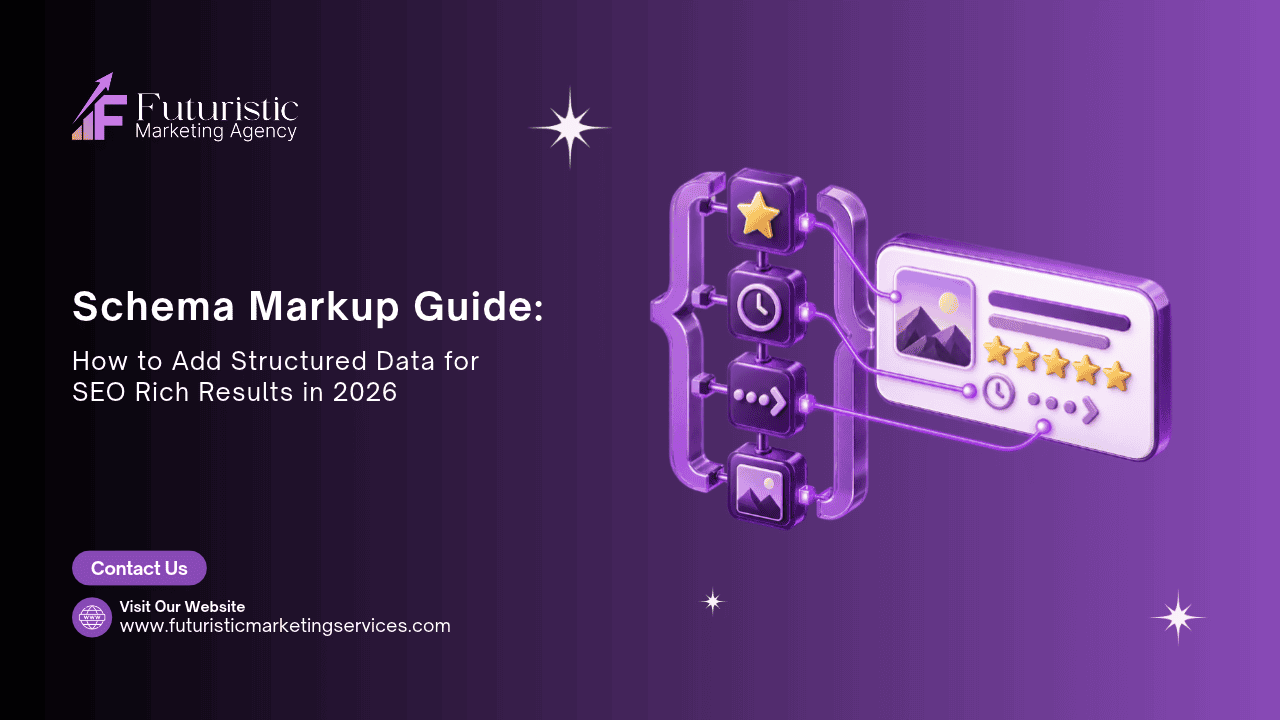
Schema markup is structured data added to a web page’s HTML that provides Google with explicit, machine-readable information about the page’s content. It enables rich results in Google Search, star ratings, FAQ dropdowns, How-To steps, product prices, event details, and more, that consistently earn higher click-through rates than standard blue-link results and significantly increase AI system citation probability.
Key Takeaways
- According to Google Search Central, schema markup enables rich results in Google Search that earn significantly higher CTR than standard results for the same ranking position
- According to Ahrefs research, pages with FAQPage schema earn 20 to 30% higher click-through rates from FAQ dropdown rich results appearing in the SERP
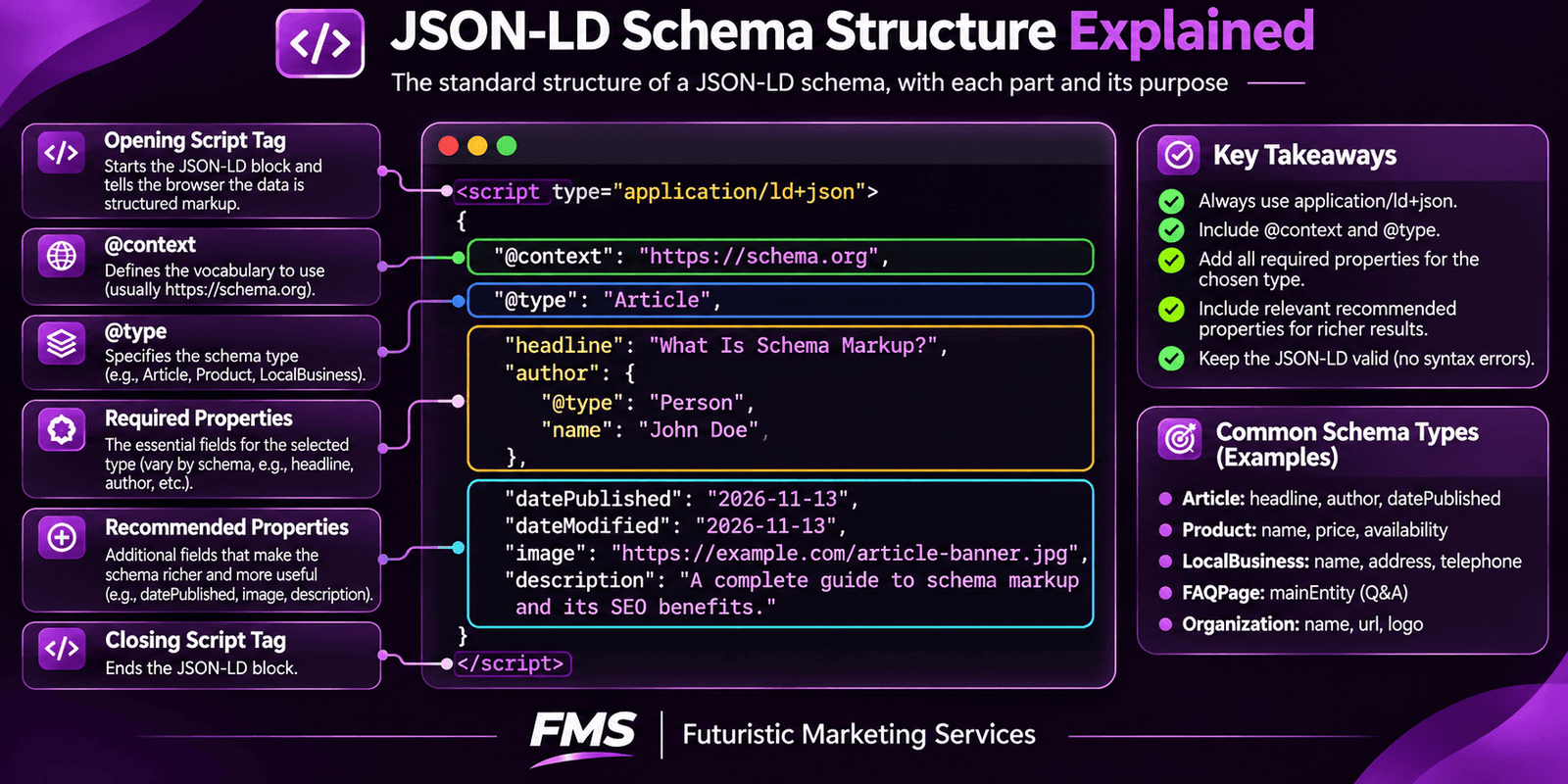
- JSON-LD is Google's recommended schema implementation method, it is the easiest to implement and maintain because it sits in a script tag rather than being interwoven with HTML
- The five highest-priority schema types for most websites are: Article (all blog posts and guides), FAQPage (all FAQ sections), Organization (homepage), LocalBusiness (local businesses), and Product (e-commerce), our eeat guide explains how these also improve E-E-A-T signals
- Schema markup must be validated with the Google Rich Results Test before every page is published, schema errors silently prevent rich results without any user-visible indication on the page
- AI systems including Google Gemini and ChatGPT preferentially cite pages with entity schema (Organization and Person with sameAs links) because it provides machine-readable authority verification
Want Schema Markup Implemented Across Your Entire Site?
Futuristic Marketing Services implements the complete schema markup programme, Article, FAQPage, Organization, LocalBusiness, and Product schema, validated and deployed across every page type for maximum rich result eligibility.
Get Schema Markup Implementedhello@futuristicmarketingservices.com | +91 8518024201
Why Schema Markup Matters for SEO in 2026
JSON-LD: The Recommended Implementation Method
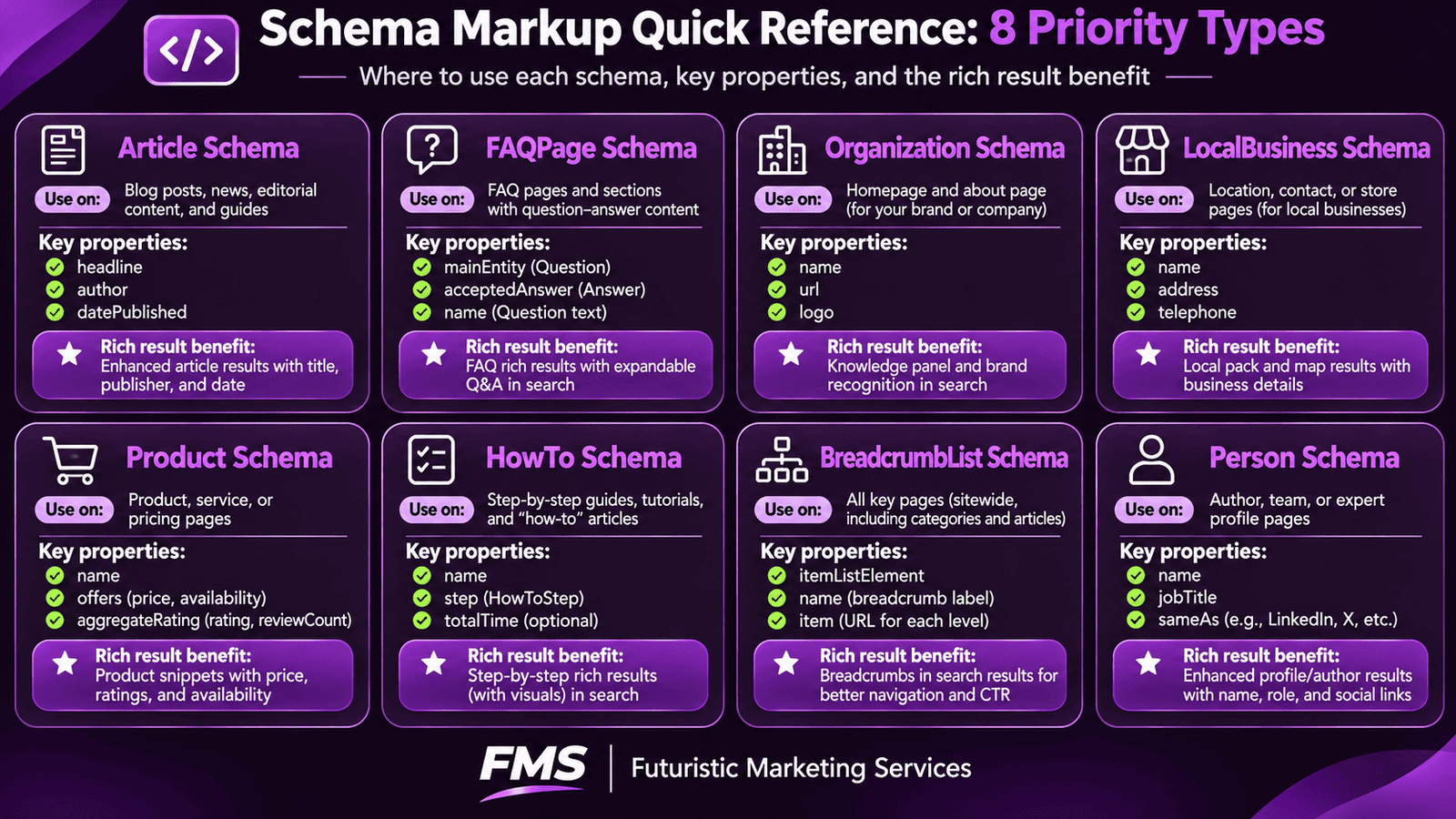
The Eight Highest-Priority Schema Types
1. Article Schema
2. FAQPage Schema
3. Organization Schema
4. LocalBusiness Schema
5. Product Schema
6. HowTo Schema
7. BreadcrumbList Schema
8. Person Schema on Author Bio Pages
| Schema Type | Pages to Implement On | Key Properties | Rich Result Benefit |
|---|---|---|---|
| Article | All blog posts, guides, news articles | headline, author (Person), publisher (Org), datePublished, image | Enhanced article display; author entity verification |
| FAQPage | Any page with FAQ section (2+ Q&As) | mainEntity: array of Questions with acceptedAnswer | FAQ dropdown rich results; 20-30% higher CTR |
| Organization | Homepage only | name, url, logo, sameAs, knowsAbout, contactPoint | Entity recognition; Knowledge Panel; AI citation eligibility |
| LocalBusiness | Contact page, about page, homepage | address, telephone, openingHours, geo, aggregateRating | Local pack rich results; map display; business info in SERP |
| Product | Individual product pages | name, image, offers (price), aggregateRating | Star rating + price in SERP; highest-CTR rich result type |
| HowTo | Tutorial and step-by-step guide pages | step array with HowToStep name and text | Step display in SERP; targets how-to search intent |
| BreadcrumbList | All interior pages | ListItem with position, name, url for each breadcrumb | Breadcrumb path visible in SERP below URL |
| Person | Author bio pages | name, jobTitle, worksFor, sameAs, description | Author entity verification for E-E-A-T; AI citation support |
Ready to Enable Rich Results and AI Citations With Schema Markup?
Our technical SEO team implements validated JSON-LD schema across every page type on your site, Article, FAQPage, Organization, and all priority types, ensuring rich result eligibility and AI entity recognition from day one.
Start Your Schema Implementationhello@futuristicmarketingservices.com | +91 8518024201
Frequently Asked Questions About Schema Markup
What is schema markup in SEO?
What is the difference between schema markup and JSON-LD?
Schema markup refers to the structured data vocabulary from Schema.org, the set of defined types and properties that describe content for search engines. JSON-LD (JavaScript Object Notation for Linked Data) is the implementation format used to deliver schema markup to Google. It is one of three formats (along with Microdata and RDFa) that schema markup can use, but JSON-LD is Google's recommended format because it sits in a self-contained script block rather than being woven through HTML elements.
Which schema types should I implement first?
How do I validate my schema markup?
Validate schema markup using the official Google Rich Results Test, enter any URL or paste raw HTML to see which rich results your schema qualifies for, errors preventing eligibility, and warnings for missing recommended properties. Also use the Google Search Console Enhancements report to monitor rich result status across your entire site, identifying pages with schema errors or eligibility losses after site updates. Validate every schema implementation before the page is published.
Does schema markup directly affect organic rankings?
Schema markup does not directly affect organic ranking positions, it does not provide ranking boosts in the traditional sense. Its primary impact is on click-through rate through rich results, which as an indirect RankBrain signal can influence rankings over time. Its secondary impact is on AI system citation selection, where entity schema significantly improves the probability of being cited in Google AI Overviews and other AI-powered search features. Combined, these indirect effects produce measurable organic traffic improvements for most sites.
What is FAQPage schema and how do I implement it?
How does schema markup help with AI Overviews and AI citations?
Schema markup helps with AI citations by providing machine-readable entity verification that AI systems use to assess source credibility. Organization schema with sameAs links allows Google's Gemini and external AI systems to verify your brand's identity against external authoritative sources. Article schema with Person author linking to a bio page with sameAs credentials allows AI systems to verify author expertise. Person schema on bio pages provides the professional credential trail that AI systems evaluate when selecting citation sources. Our eeat guide covers the complete AI-era E-E-A-T framework.
What are the most common schema markup errors?
The most common schema errors preventing rich results are: missing required properties (every schema type has required fields that must be present for eligibility), invalid property values (dates must be in ISO 8601 format, URLs must be absolute URLs starting with https://), schema pointing to noindexed pages (author bio URLs, image URLs, and organisation URLs must all be indexable), using incorrect @type values or nesting schema incorrectly, and failing to validate after site updates that may break existing schema. Check the Google Search Console Enhancements report monthly to catch new errors introduced by site changes.
Give Google the Structured Data It Needs to Understand and Showcase Your Content
At Futuristic Marketing Services, we implement the complete schema markup programme, all priority types, fully validated, deployed across every relevant page type, so your content earns the rich results and AI citations your competitors are missing.
Talk to Our Schema Markup Specialistshello@futuristicmarketingservices.com | +91 8518024201