

A website redesign in the UK costs between £3,000 for a basic refresh of a small site and £150,000 or more for a complete enterprise rebuild with custom development. The wide range reflects the enormous variation in what a redesign actually involves, from updating a WordPress theme and refreshing copy through to building a new site architecture from scratch on a new platform, migrating thousands of pages, implementing eCommerce functionality, and commissioning a full UX research programme. Understanding the cost drivers before requesting quotes is the most important step in getting a useful, comparable quote rather than wildly different numbers that cannot be evaluated.
Key Takeaways
- UK website redesign costs range from £3,000 to £150,000 or more. A standard 10 to 20 page WordPress marketing site redesign with custom design and full SEO preservation costs £8,000 to £25,000 at professional agency rates in 2026. A WooCommerce eCommerce redesign costs £15,000 to £60,000 depending on catalogue size and custom functionality.
- Content is the most frequently underestimated redesign cost. Professional copywriting for a 15-page site costs £2,000 to £6,000; photography or video production adds £500 to £5,000 or more. These costs are almost never included in developer quotes, budget for them separately or the redesign will stall at content delivery.
- Website migration SEO management, redirect mapping, staging site technical audit, and 90-day post-launch monitoring, must be included in any redesign that changes URL patterns. Migration without SEO management causes ranking losses that can take 6 to 12 months to recover. Add £1,500 to £5,000 to the project budget for professional migration SEO.
- A website UX audit before the redesign brief is written is the highest-leverage pre-redesign investment. A £2,000 to £5,000 UX audit reveals which elements of the current site are working and converting well, preventing the most common redesign failure: rebuilding the site more attractively while removing the elements that generated conversions.
- Core Web Vitals performance on the redesigned site must be validated in staging before launch. A redesign that degrades mobile performance from Good to Poor status simultaneously loses the SEO advantage the previous site had, compounding any migration disruption with a performance ranking penalty.
- Fixed-price redesign quotes are preferable to hourly billing, they align the agency incentive with efficient delivery and give the client budget certainty. The change request process must be defined in writing before the project starts: additional pages, functionality not in the original brief, and content revisions beyond a defined number of rounds are common invoice-inflators in redesign projects.
- According to Baymard Institute, a UX-led redesign that addresses identified conversion barriers can improve lead generation rate by 25 to 100%. The commercial return of a well-executed redesign is measurable, define the conversion rate improvement target before commissioning, and track it for 6 months post-launch.
Redesign Planning
Get an Honest Redesign Quote Based on Your Actual Requirements
Futuristic Marketing Services provides transparent website redesign quotes, with content, SEO migration, performance engineering, and UX improvements included, not listed as extras.
Get Your Redesign Quote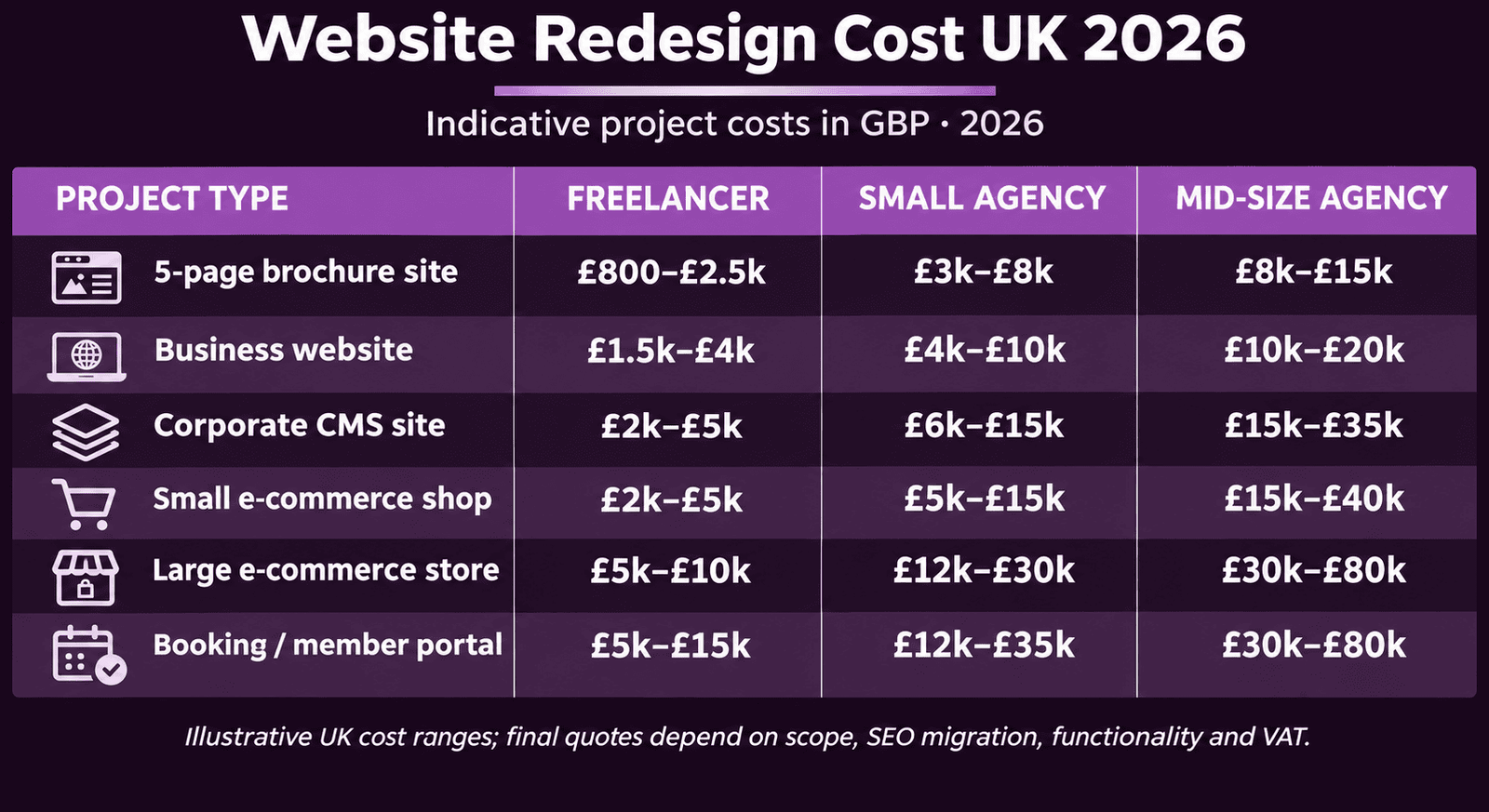
UK Website Redesign Cost by Project Type
| Project Type | Freelancer Cost | Small Agency | Mid Agency | Timeline |
|---|---|---|---|---|
| 5 to 10 page brochure site refresh (same CMS, updated design) | £2,000 to £5,000 | £5,000 to £12,000 | £10,000 to £22,000 | 3 to 6 weeks |
| Full marketing site redesign (WordPress, custom design) | £6,000 to £15,000 | £12,000 to £28,000 | £25,000 to £55,000 | 6 to 12 weeks |
| eCommerce site redesign (WooCommerce, up to 500 products) | £10,000 to £25,000 | £20,000 to £45,000 | £40,000 to £90,000 | 8 to 16 weeks |
| CMS platform migration redesign (e.g. Magento to WooCommerce) | £12,000 to £30,000 | £25,000 to £60,000 | £50,000 to £120,000 | 10 to 20 weeks |
| Enterprise site redesign (custom development, 100+ pages) | N/A, team required | £40,000 to £100,000 | £80,000 to £250,000 | 16 to 36 weeks |
| Landing page redesign (single page, CRO-focused) | £800 to £3,000 | £2,500 to £6,000 | £5,000 to £12,000 | 1 to 3 weeks |
The Seven Cost Drivers in a Website Redesign
| Cost Driver | Low Cost Scenario | High Cost Scenario | Approximate Range |
|---|---|---|---|
| Number of pages and templates | 5 pages, 2 templates (home + inner) | 150 pages, 12 unique templates | £500 to £15,000 |
| Design approach (template vs custom) | Premium template configured | Bespoke Figma designs implemented pixel-precisely | £1,000 to £20,000 |
| Content production | Client provides all copy and images ready to use | Full copywriting, photography, and video commissioned | £0 to £15,000 |
| Custom functionality | Standard plugins cover all requirements | Bespoke plugin or application development required | £0 to £40,000 |
| eCommerce scope | No eCommerce on the site | 500 products, subscription, B2B pricing, ERP integration | £0 to £50,000 |
| SEO migration management | Simple redesign with no URL changes | Full URL restructure with 1,000 or more redirect mappings | £500 to £5,000 |
| Performance engineering | Basic caching setup | Core Web Vitals engineering to Good status with managed hosting migration | £500 to £3,000 |
The Hidden Costs of a Website Redesign
Hidden Redesign Costs to Budget For
Content, the biggest hidden cost
Developer quotes never include content. A 20-page redesign requires professional copywriting (£1,500 to £5,000), photography or stock imagery (£300 to £3,000), and potentially video (£1,000 to £10,000 or more). Content also causes delays, projects stall most often waiting for client content delivery. Define content responsibilities and deadlines in the project brief.
SEO migration
Any redesign changing URL patterns requires redirect mapping, staging site technical audit, GSC sitemap submission, and 90-day monitoring. Without this, the redesign destroys organic rankings built over years. Budget £1,500 to £5,000 for professional SEO migration management, omitting it risks far greater cost in recovered rankings.
Domain and hosting migration
Moving to a new hosting provider adds £200 to £1,000 for professional migration plus 1 to 4 weeks of DNS propagation and monitoring. Managed WordPress hosting costs £25 to £150 per month, budget for the annual cost increase from any hosting upgrade.
Premium plugin licences
A professional WordPress redesign typically requires: Elementor Pro (£49 per year), Rank Math Pro (£59 per year), WP Rocket (£40 per year), and UpdraftPlus Premium (£70 per year). Combined: approximately £218 per year, often not included in redesign quotes.
Post-launch maintenance
A professional care plan (weekly updates, daily backups, security monitoring) costs £80 to £250 per month. This ongoing cost must be budgeted from launch day, a redesigned site without maintenance depreciates in security and performance from the first week.
Training
If the CMS changes or significant new functionality is added, staff training time is required. A 2-hour CMS training session from the developer costs £200 to £500. A video training library for a complex build costs £500 to £1,500. Budget for this particularly if the team managing the site is non-technical.
What a Professional Redesign Should Include
| Deliverable | Included in Professional Quote? | Often Excluded? |
|---|---|---|
| Discovery session and project brief | Yes, typically 2 to 4 hours | Rarely excluded at professional level |
| Wireframes and UX planning | Yes, at design-led agencies; sometimes excluded at build-focused agencies | Often excluded by developer-only freelancers |
| Custom Figma or Adobe XD designs | Yes, for custom design projects | Excluded in template-based redesigns (not required) |
| WordPress CMS and plugin setup | Yes | Rarely excluded |
| Mobile responsiveness and cross-browser testing | Yes | Low-cost providers may skip systematic testing |
| Basic on-page SEO (title tags, meta descriptions, H1s) | Sometimes, specify explicitly in the brief | Often excluded, verify before signing |
| 301 redirect implementation | Sometimes, specify if URL structure is changing | Frequently excluded, must be specified |
| Google Search Console and Analytics setup | Sometimes, ask explicitly | Often excluded from development scope |
| Core Web Vitals performance validation | Rarely, must be specified | Almost always excluded unless specifically requested |
| Post-launch bug fix warranty (30 days) | At reputable agencies, yes | At low-cost providers, often not defined |
Quote Evaluation
Get a Redesign Quote That Includes Everything, No Hidden Surprises
Futuristic Marketing Services provides all-inclusive redesign quotes, content planning, SEO migration, performance engineering, plugin licences, and post-launch support all specified upfront.
Request Your Redesign Quote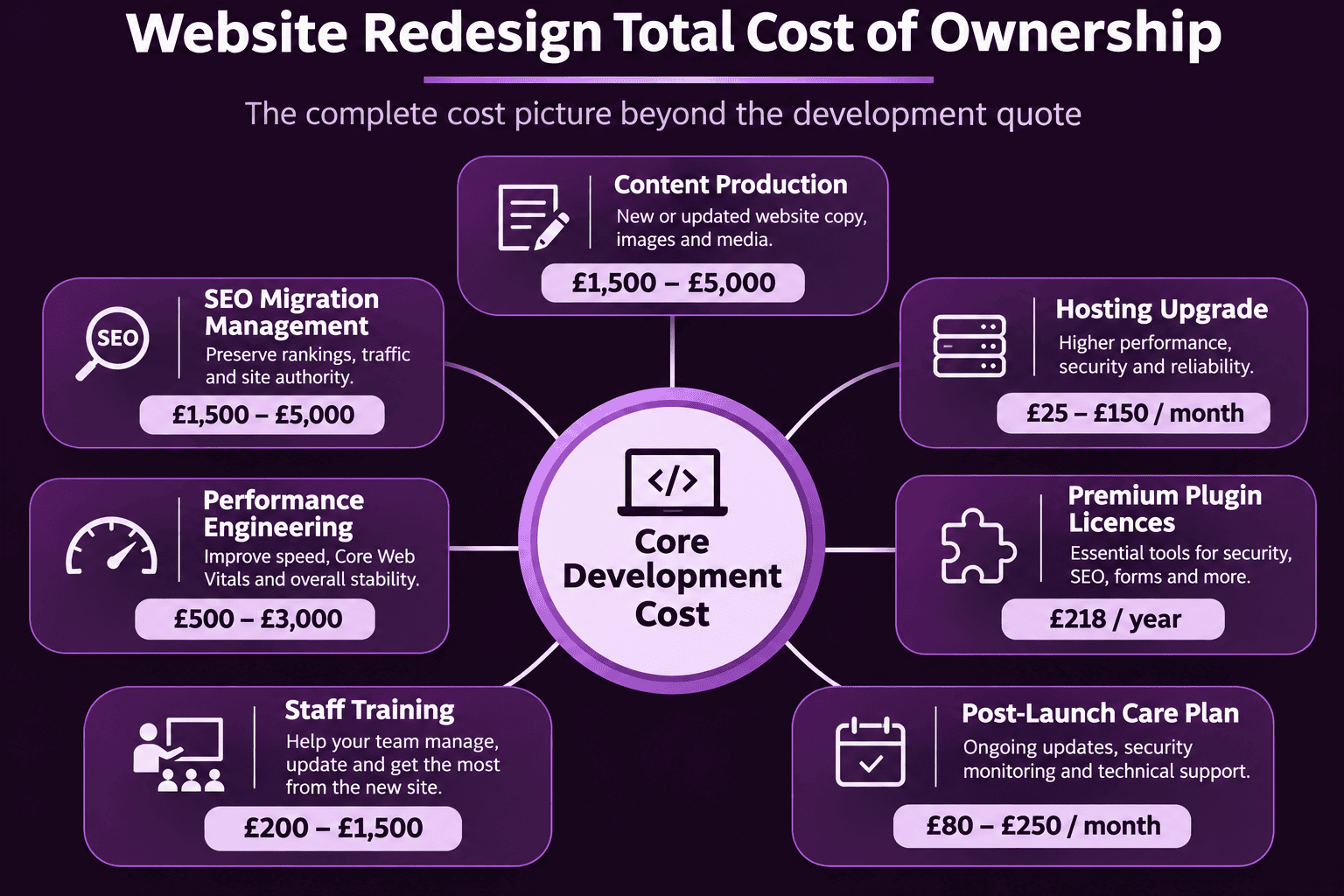
Frequently Asked Questions About Website Redesign Cost
How much does a website redesign cost in the UK?
How long does a website redesign take?
What is included in a website redesign?
Should I redesign or rebuild my website?
How do I avoid losing SEO rankings during a redesign?
What questions should I ask a web agency before a redesign?
Should I do a UX audit before a website redesign?
What is the difference between a website refresh and a full redesign?
Can I redesign my website myself?
What should I expect after a website redesign?
How do I get value from a website redesign investment?
Are there ongoing costs after a website redesign?
Futuristic Marketing Services
A Website Redesign That Pays for Itself
Futuristic Marketing Services delivers website redesigns with UX-led design, Core Web Vitals performance, SEO migration management, and a post-launch measurement framework, so the commercial impact is visible and measurable.
Start Your Redesign