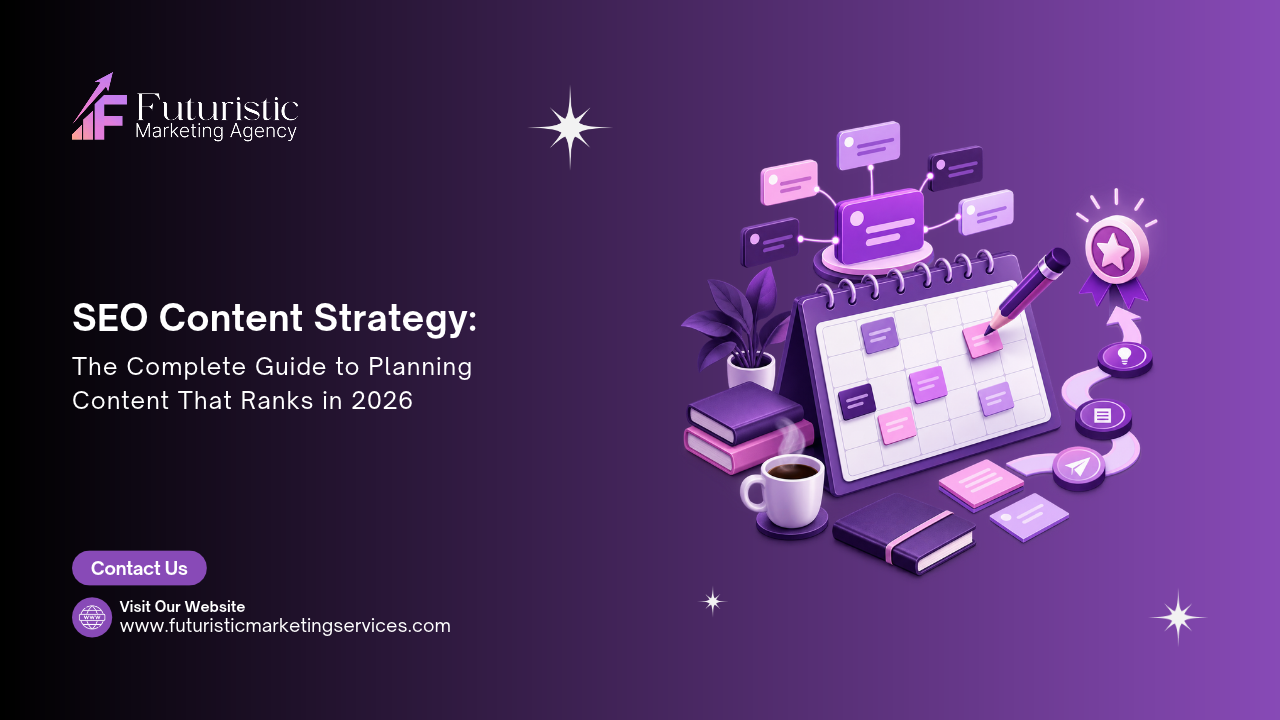
An SEO content strategy is a structured plan for creating, organising, and publishing content that earns organic search rankings, builds topical authority, and converts visitors into customers. It is the system that determines what to write, how to structure it, how frequently to publish, and how individual pieces connect to build a site-wide authority network rather than a collection of isolated articles.
Key Takeaways
- According to HubSpot, businesses publishing 16 or more blog posts per month earn 3.5x more traffic than those publishing 4 or fewer, consistency of output is itself a ranking factor through topical coverage breadth
- According to Ahrefs research, only 5.7% of newly published pages rank in the top 10 within a year, a content strategy built around topical clusters dramatically improves this probability
- Topical authority, comprehensive coverage of a topic area, is now a primary ranking signal: our topical authority guide covers the complete cluster architecture framework
- A content calendar turns your keyword map into a scheduled production plan, preventing the gaps in publication frequency that Google's freshness signals interpret as low editorial investment
- Every piece of content must serve a specific search intent with a specific target keyword, publishing without a keyword map creates the overlap and cannibalization that kills organic growth
- Google's Helpful Content System evaluates site-wide quality, our E-E-A-T guide covers the standards every page must meet to avoid a domain-wide quality penalty
Want a Complete SEO Content Strategy Built for Your Business?
Futuristic Marketing Services builds data-driven content strategies, from topical authority mapping and keyword research to content calendars and quality standards, that produce consistent, compounding organic growth.
Get a Free Content Strategy Consultation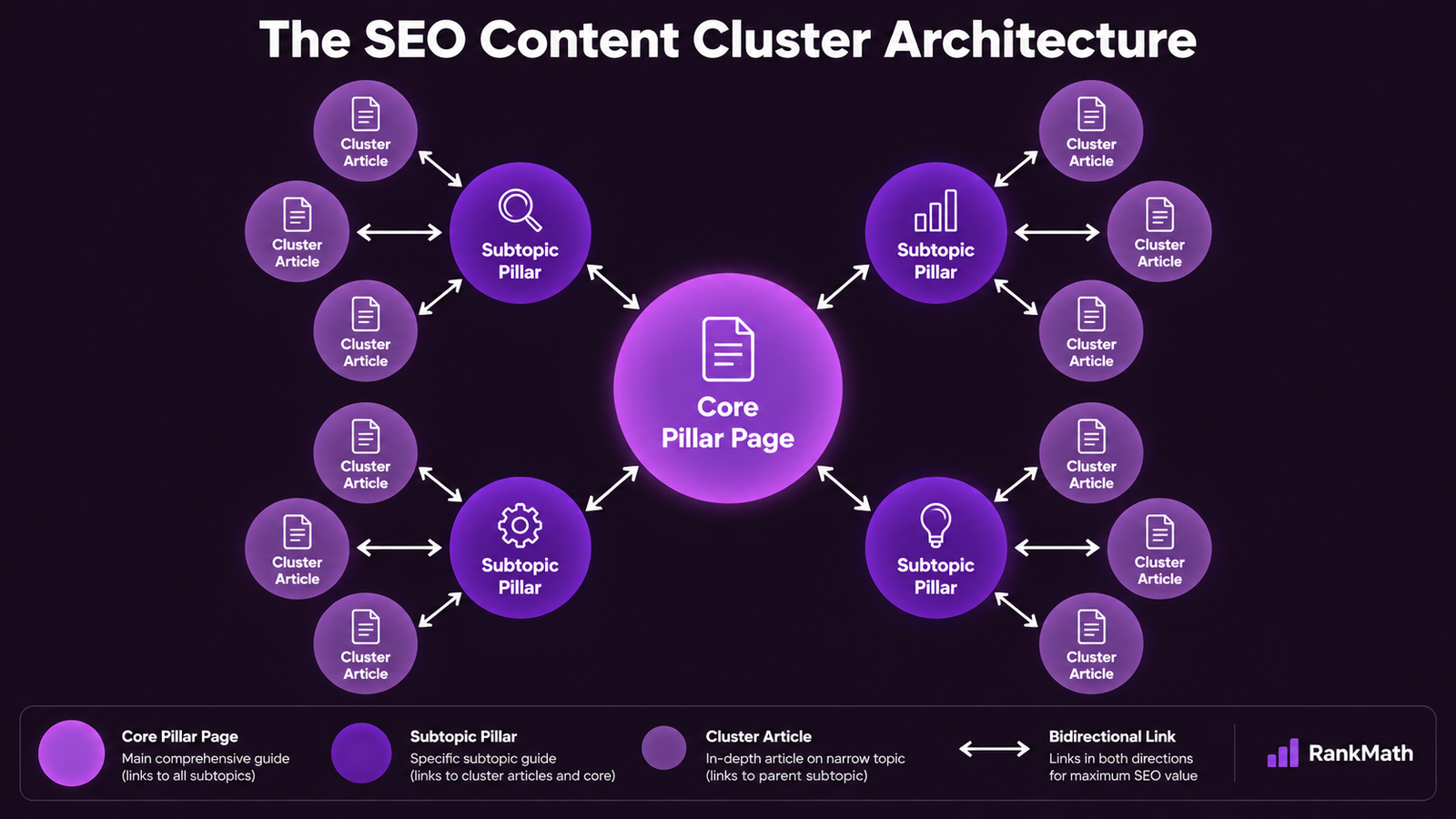
What Is an SEO Content Strategy and Why You Need One
Step 1, Define Your Topical Authority Framework
| Content Level | What It Covers | Target Keyword Type | Typical Length | Linking Role |
|---|---|---|---|---|
| Core Pillar Page | The broadest central topic of your site | Short head term with high volume | 3,000 to 5,000 words | Receives links from all cluster articles |
| Subtopic Pillar | A major category within the core topic | Medium-tail keyword with moderate volume | 2,000 to 3,500 words | Links to core pillar and its own cluster articles |
| Cluster Article | A specific question, process, or comparison within a subtopic | Long-tail keyword with specific intent | 1,200 to 2,500 words | Links to its parent subtopic pillar |
| Supporting Content | FAQs, definitions, and short explainers | Question keywords and definition queries | 400 to 800 words | Links to relevant cluster articles |
Step 2, Build Your Keyword Map
Step 3, Create Your Content Calendar
Step 4, Set Your Content Quality Standards
- Primary keyword appears in H1, first paragraph, at least 2 H2 headings, and conclusion, full placement rules in our on-page SEO guide
- Search intent correctly identified and matched, content type, depth, and format align with dominant intent of top-10 SERP results
- Named author with bio page linked from byline, anonymous content fails the Expertise and Trustworthiness dimensions of E-E-A-T
- Minimum 3 primary source citations with inline hyperlinks to original sources
- Minimum 3 relevant internal links to other pages in the topical cluster
- FAQ section with minimum 5 questions and 40 to 60 word standalone answers
- Paragraphs maximum 4 lines for mobile readability, over 60% of search traffic arrives on mobile devices
- Every H2 section begins with 2 to 3 introductory sentences before any bullet list or H3 subheading
Step 5, Measure Content Performance and Iterate
Ready to Turn Your Content Into a Consistent Organic Growth Machine?
Our SEO content strategists build complete topical authority programmes, from cluster architecture and keyword mapping to content calendar creation and quality standards, that produce compounding organic traffic growth.
Start Your Content StrategyFrequently Asked Questions
Q. What is an SEO content strategy?
Q. What is topical authority and why does it matter?
Q. What is a content cluster and how does it work?
Q. How many articles should I publish per month for SEO?
Q, What is keyword cannibalization and how do I avoid it?
Q. How do I measure if my SEO content strategy is working?
Q. What makes SEO content different from regular content?
Get the SEO Content Programme That Compounds Traffic Month After Month
At Futuristic Marketing Services, we build complete topical authority programmes, cluster architecture, content calendar, quality standards, and measurement framework, that produce consistent, compounding organic growth for your business.
Talk to a Content Strategy Specialist