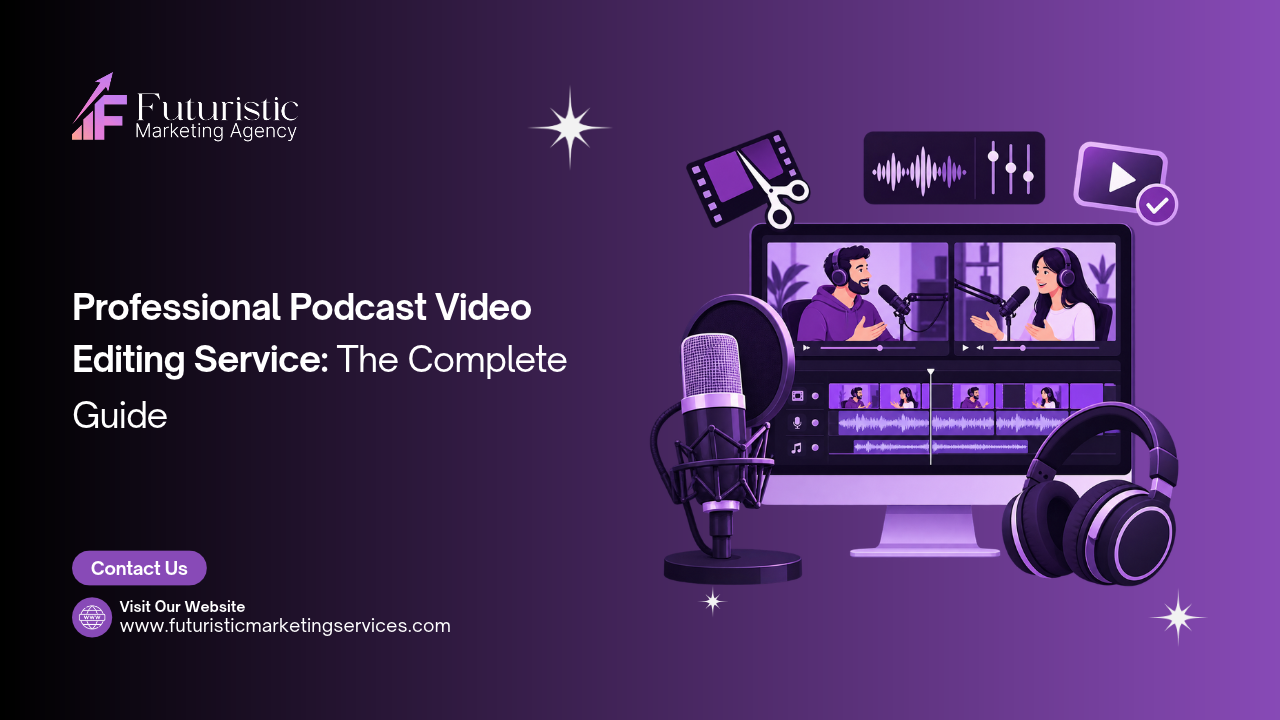
Professional Podcast Video Editing Service: The Complete Guide

podcast video editing service

A podcast published only on audio platforms, Spotify, Apple Podcasts, Google Podcasts, reaches only the audience that already knows the show exists. A professionally edited podcast with video on YouTube, 10–15 short-form clips distributed across TikTok, Instagram, LinkedIn, and YouTube Shorts, a -16 LUFS audio master for all podcast apps, SEO-optimised show notes on the website, and a click-compelling thumbnail reaches entirely new audiences on every platform it touches simultaneously. According to <a href=”https://edisonresearch.com” target=”_blank” rel=”noopener”>Edison Research’s podcast listener data</a>, the most successful podcasts are discovered across multiple platforms, with YouTube increasingly becoming the primary discovery channel even for shows that monetise primarily through audio.

A podcast published only on audio platforms, Spotify, Apple Podcasts, Google Podcasts, reaches only the audience that already knows the show exists. A professionally edited podcast with video on YouTube, 10–15 short-form clips distributed across TikTok, Instagram, LinkedIn, and YouTube Shorts, a -16 LUFS audio master for all podcast apps, SEO-optimised show notes on the website, and a click-compelling thumbnail reaches entirely new audiences on every platform it touches simultaneously. According to Edison Research's podcast listener data, the most successful podcasts are discovered across multiple platforms, with YouTube increasingly becoming the primary discovery channel even for shows that monetise primarily through audio.
This guide covers the complete professional podcast video editing standard: the five deliverable categories that define a full-service package, the technical requirements for each platform, the audio mastering standard that separates professional from amateur podcast audio, the clip production framework that drives growth, and the pricing benchmarks for evaluating services.

Key Takeaways

  • One 60-minute podcast recording, professionally edited to the 5-deliverable standard, produces 30+ individual content assets: 1 full YouTube video, 10–15 social clips, 1 audio master, 1 show notes page, and thumbnail assets, each opening a different discovery pathway for new listeners
  • Audio quality is the non-negotiable quality floor: according to Edison Research, audio quality problems are the top reason podcast listeners stop following a show, above content quality, frequency, or episode length
  • The -16 LUFS integrated loudness standard specified by Spotify and Apple Podcasts ensures a podcast plays at consistent perceived volume in every listener's feed, mastered too loud or too quiet, it sounds immediately unprofessional
  • Short-form clips (10–15 per episode) are the primary growth mechanism for most podcasts, introducing the show's content and personality to audiences on platforms they already use daily, converting 0.3–1.5% of clip viewers into podcast subscribers
  • Professional show notes optimised for search create a Google discovery pathway that podcast app search alone cannot provide, a well-structured show notes page can rank for informational queries and drive listeners who would never have found the show through Spotify or Apple search
  • For the full evaluation framework for choosing between podcast editing services, the best podcast editing services guide covers the 7 criteria that separate quality services from value-lacking ones

Want a Professional Podcast Video Editing Service?

Futuristic Marketing Services provides the complete 5-deliverable podcast editing package, YouTube video, 10–15 social clips with kinetic captions, audio master, SEO show notes, and thumbnail, for podcasts that grow on every platform.

Get Podcast Editing Pricing

Why Podcast Video Editing Is More Than Just Editing

The difference between a podcast team that treats editing as a technical task and one that treats it as a content multiplication system is the difference between a show that grows slowly through word-of-mouth and one that generates measurable new audience every week from every episode. Professional podcast video editing is not a production service, it is a multi-platform content engine with five distinct components that work together to maximise the reach of every recording.

THE CONTENT MULTIPLICATION PRINCIPLE

One 60-minute podcast recording → 1 full YouTube video (discovery on YouTube search and recommendation) + 10–15 short-form clips (discovery on TikTok, Instagram, LinkedIn, YouTube Shorts) + 1 audio master (discovery on Spotify, Apple Podcasts, all podcast apps) + 1 SEO show notes page (discovery on Google search) + thumbnail assets. That is 30+ individual assets from a single recording session. Each opens a different discovery pathway for new listeners who would never have found the show through the other pathways.

The 5-Deliverable Professional Standard

DeliverableWhat It IncludesPrimary PlatformDiscovery Pathway
Full Episode Video16:9 YouTube-ready edit, chapters, branded lower thirds, intro/outro, end screenYouTubeYouTube search and recommendation
Short-Form Clip Library10–15 vertical 9:16 clips with kinetic captions, hook-optimised openings, all platform variantsTikTok, Reels, Shorts, LinkedInAlgorithm-served discovery to new audiences
Audio Master-16 LUFS normalised MP3/AAC, noise-reduced, EQ-balanced, compressedSpotify, Apple Podcasts, all appsPodcast app search and listening
Show Notes & TimestampsSEO-targeted summary, chapter timestamps, guest bio, resource links, keyword headingsWebsite, podcast descriptionsGoogle search and direct website traffic
Thumbnail + Title AssetsEpisode thumbnail, A/B variant, title card, social sharing graphicYouTube, podcast directoriesClick-through rate from search results

Full Episode Video: The Technical Editing Standard

Dialogue editing: A professional full episode dialogue edit removes dead air (pauses over 0.8 seconds), filler words appearing more than twice per minute, false starts and restated sentences, and unintelligible crosstalk. The professional standard reduces raw recording runtime by 15–25% while significantly increasing information density per minute, which is the editing variable most directly correlated with listener retention and positive review quality.
strong>Visual production elements: The professional video includes branded lower thirds with each speaker's full name, title, and organisation at first appearance (minimum 10 seconds on screen). Chapter markers are added at every major topic transition, minimum one chapter per 8–10 minutes of content. The intro card (show title, episode number, guest name) plays 5–8 seconds. The outro card (subscribe CTA, next episode preview, social links) plays 8–12 seconds. All elements use the show's consistent brand colour system.
Audio quality for video: The audio embedded in the full episode video targets -14 to -16 LUFS for YouTube compatibility, with noise reduction, equalisation, and dynamic compression applied. All speakers are level-matched so listener experience is consistent regardless of which speaker is talking, inconsistent speaker levels between hosts and guests is the most common audio failure in multi-speaker podcast video.

The Short-Form Clip Library: The Growth Engine

The 10–15 short-form clips produced from each episode are the primary growth mechanism for most podcasts. Each clip introduces the show's content and personality to new audiences on platforms they already use daily. The conversion rate from clip view to podcast subscriber is typically 0.3–1.5%. A channel generating 100,000 Shorts views per month at 0.5% conversion adds 500 new podcast followers per month solely from Shorts, compounding to 6,000 new followers per year from a single distribution channel.

What Makes a Podcast Clip Perform

High-performing podcast clips have five characteristics: they open at a moment of high verbal energy rather than a topic introduction; the first spoken sentence is the most compelling statement in the clip; kinetic captions make the content fully legible without audio; the clip is 45–90 seconds, long enough to complete one strong point; and there is a clear emotional or informational payoff by the final 10 seconds that rewards viewers who watched to the end. The podcast to YouTube Shorts guide covers the complete clip identification and editing workflow in detail.

Audio Mastering: The -16 LUFS Standard Explained

Integrated Loudness Units relative to Full Scale (-16 LUFS) is the target loudness level specified by Spotify and Apple Podcasts for consistent volume across their platforms. A podcast mastered at -16 LUFS plays at the same perceived volume as every other podcast in the listener's feed.
Processing StageWhat It DoesTarget Specification
Noise reductionRemoves room tone, HVAC hum, mic hissBelow -60 dBFS noise floor
High-pass filterRemoves sub-80Hz low-frequency rumbleFilter at 80–120 Hz, -24 dB/oct
EQ presence boostImproves vocal clarity and intelligibility+2–4 dB at 2–4 kHz, Q 1.5
Dynamic compressionEvens volume between speakers across the episode4:1 ratio, fast attack, -18 dB threshold
Loudness normalisationTargets platform standard output level-16 LUFS integrated, -1 dB true peak

SEO-Optimised Show Notes: The Discovery Multiplier

Show notes optimised for search create a discovery pathway through Google that podcast app search alone cannot provide. A well-structured show notes page targeting the primary topic of the episode can rank for informational queries that bring new listeners to the podcast through Google, an audience that would never have found the show through Spotify or Apple Podcasts search.
strong>Professional show notes include: Opening paragraph (150–200 words) keyword-targeted for search engines as much as for listeners; complete timestamp list formatted for YouTube chapter compatibility; guest bio and social links; resource links for everything mentioned in the episode; and keyword-targeted H2/H3 headings that reflect the search terms listeners use to find content on the episode's topics.

Podcast Video Editing Pricing

Service ScopePer Episode (Freelancer)Per Episode (Specialist Agency)Monthly x4 Episodes
Audio edit + transcript only£50–150£150–300£600–1,200 (agency)
Full video + captions£100–250£250–500£1,000–2,000
Full video + 5–8 clips£200–400£400–700£1,600–2,800
Full 5-deliverable package£300–600£600–1,000£2,400–4,000
Full package + audiogram£350–700£700–1,200£2,800–4,800

How to Choose a Podcast Editing Service

The evaluation criteria that separate high-value podcast editing services from value-lacking ones: Podcast specialisation (primary service or one of many?), clip quality samples (request 5 clips from a conversation episode, not a highlight reel), audio quality samples (listen to published client podcasts), show notes standard (request a sample show note, generic summaries without SEO indicate limited capability), turnaround SLA (3–5 business days guaranteed in writing), dedicated editor (same editor for every episode builds brand consistency), and pricing transparency (reputable services publish pricing without requiring a sales call).
For the complete evaluation framework covering all 7 criteria, the best podcast editing services guide and the best podcast editing agencies comparison provide the detailed selection process.

Frequently Asked Questions

How many clips should a podcast editing service produce per episode?

A professional service should produce 10–15 clips from a 60–90 minute recording, enough for daily social media posting across two platforms without recycling clips within two weeks. Services producing only 3–5 clips per episode are not optimising for reach. Full-package pricing with sub-10 clips is delivering below the standard the pricing implies.

What makes podcast audio sound unprofessional, and can editing fix it?

The most common audio quality problems in podcast recordings are: room echo from hard, untreated surfaces (significantly reduced but not eliminated in editing), background HVAC hum or room noise (largely removable with AI noise reduction tools), inconsistent speaker volumes between hosts and guests (fixable through individual track processing), and microphone hiss or digital noise (reducible through noise reduction). A professional editor using Descript, iZotope RX, or DaVinci Resolve Fairlight can address all of these significantly, but source recording quality always remains the ceiling. A dedicated USB or XLR microphone in a soft-furnished room produces the best starting material for professional editing to work with.

Start Your Professional Podcast Video Editing Service

Futuristic Marketing Services provides the complete 5-deliverable podcast editing package with SLA-backed turnaround, dedicated editor, and the clip volume that grows podcasts on every platform.

Get Podcast Editing Started

Conclusion

Professional podcast video editing is a content multiplication system, not just a production service. The 5-deliverable standard transforms each recording session into 30+ individual content assets distributed across every platform where the podcast's audience might discover it. The reach differential between a podcast deploying the full 5-deliverable standard and one publishing on audio platforms only is typically 6–9 times in total audience exposure per episode.
For podcasters evaluating their current editing service against this standard, the best podcast editing services guide provides the complete comparison framework. For the specific Shorts editing workflow that drives podcast subscriber growth through YouTube, the podcast to YouTube Shorts guide covers the complete clip selection and production standard.
Share this post :
Picture of Devyansh Tripathi
Devyansh Tripathi

Devyansh Tripathi is a digital marketing strategist with over 5 years of hands-on experience in helping brands achieve growth through tailored, data-driven marketing solutions. With a deep understanding of SEO, content strategy, and social media dynamics, Devyansh specializes in creating results-oriented campaigns that drive both brand awareness and conversion.

All Posts