Shopify SEO is the process of optimising a Shopify store to rank in organic search results, covering technical configuration, collection page content, product page optimisation, schema markup, performance improvement, and a content marketing strategy that drives category-level organic traffic. Shopify provides a capable SEO foundation out of the box, but the default configuration leaves significant organic ranking potential unrealised. A structured Shopify SEO programme addresses the platform-specific limitations and implements the full technical and content framework that produces compounding organic revenue growth.
Key Takeaways
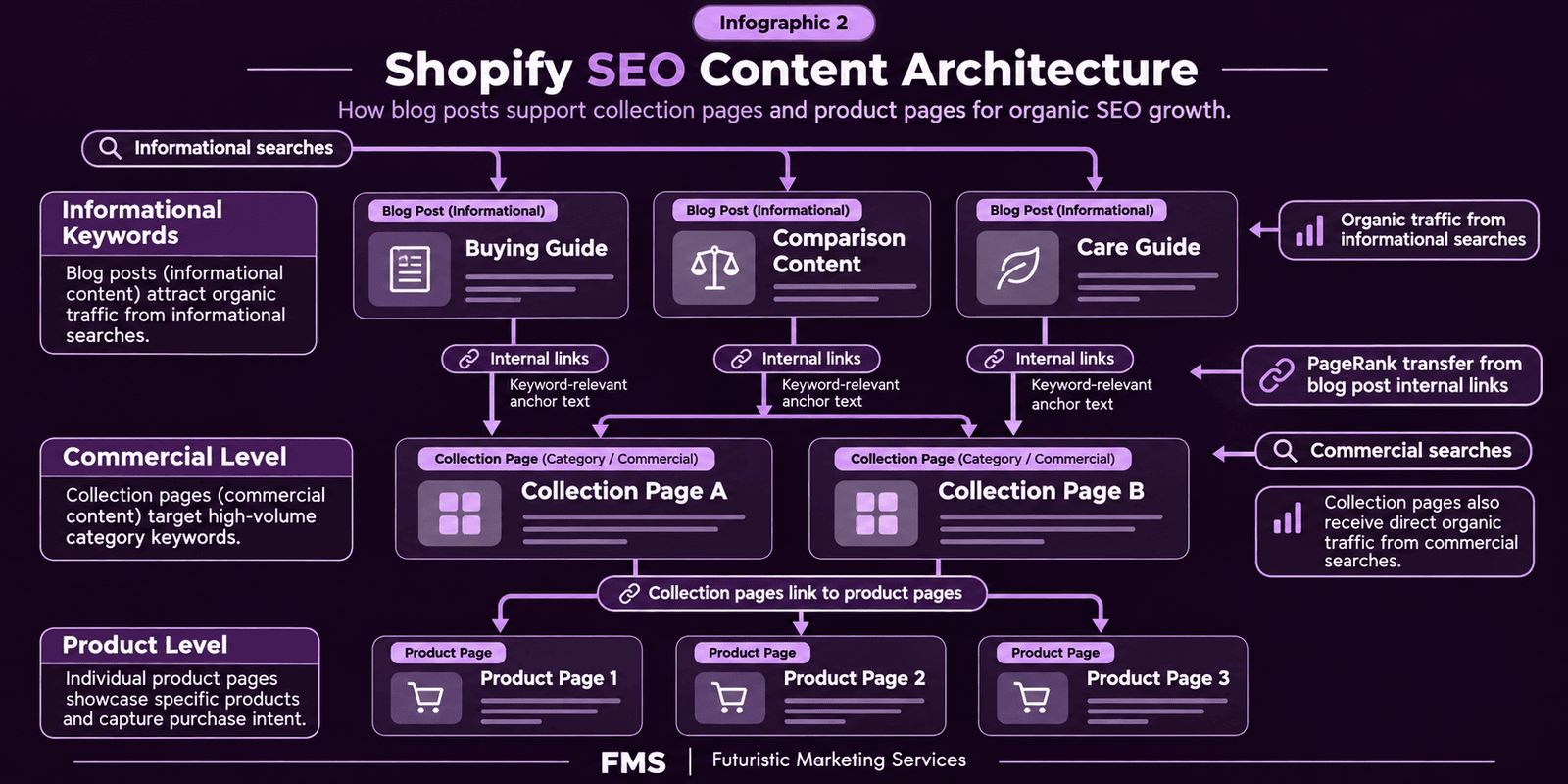
- Collection pages are the highest-priority Shopify SEO target, they rank for the highest-volume commercial keywords and drive the most revenue-generating organic traffic. Each collection page must have: a unique keyword-optimised title tag; a unique 150 to 300 word introductory description above the product grid; correct BreadcrumbList schema; and internal links from blog posts targeting related informational keywords.
- The mandatory /collections/ and /products/ URL prefixes in Shopify cannot be changed. This is a minor structural constraint, it does not significantly affect rankings for most stores. What matters far more is the keyword relevance of the collection slug: /collections/running-shoes/ outranks /collections/collection-123/ for every running shoe search query.
- Shopify mobile Lighthouse scores of 65 to 80 on standard themes make consistent Good Core Web Vitals status more challenging than WooCommerce but achievable with the correct theme and configuration. Choose a performance-optimised Shopify theme (Dawn, Craft, Ride), compress all images to WebP, and defer all non-Shopify JavaScript loaded via apps.
- Product schema markup, JSON-LD containing Product, Offer, and AggregateRating, enables price, availability, and star ratings to appear directly in Google search results. This 20 to 30% increase in click-through rate is the highest-ROI technical SEO implementation for any Shopify product page. Most quality Shopify themes include basic Product schema; the SEO Manager app extends it with AggregateRating.
- According to Ahrefs, internal linking from Shopify blog posts to collection pages is among the highest-impact Shopify SEO tactics. Each blog post covering a related informational keyword should link to 2 to 3 collection pages with descriptive keyword-relevant anchor text. This distributes PageRank from the content to the commercial pages that need it most.
- Semrush research confirms that collection pages targeting category keywords drive the highest organic revenue on Shopify stores. Investing in unique collection page descriptions targeting the primary category keyword, not manufacturer-provided copy, is the highest-commercial-impact content investment in any Shopify SEO programme.
- Shopify's duplicate content problem: each product can appear at /products/product-name/ AND at /collections/collection-name/products/product-name/, creating two canonical URLs for the same page. Shopify automatically sets the canonical to the primary product URL (/products/), which is correct. Verify this is working in your theme by checking the canonical tag on a collection-linked product page.
Shopify SEO Audit
Get Your Shopify Store SEO Audited and Optimised
Futuristic Marketing Services provides Shopify SEO audits with specific, prioritised fixes, collection page content, schema markup, performance improvement, and a content strategy roadmap.
Request a Shopify SEO AuditShopify SEO Technical Setup Checklist
| Technical SEO Task | Where to Configure | What It Does |
|---|---|---|
| Verify in Google Search Console | GSC → Add Property → Domain or URL prefix | Enables performance monitoring, sitemap submission, coverage report, and Core Web Vitals field data, the primary Shopify SEO monitoring tools |
| Submit XML sitemap | GSC → Indexing → Sitemaps → Enter yourstore.com/sitemap.xml | Shopify auto-generates a sitemap containing all products, collections, pages, and blog posts, submitting accelerates Google discovery |
| Configure Google Analytics 4 | Shopify Admin → Online Store → Preferences → Google Analytics | Enables conversion tracking, traffic source analysis, and funnel measurement, required for measuring SEO ROI |
| Set canonical domain (www or non-www) | Shopify Admin → Online Store → Domains → Primary Domain | Prevents duplicate content between www and non-www versions, Shopify redirects all traffic to the primary domain |
| Review robots.txt | Online Store → Themes → Edit code → config/robots.txt.liquid | Shopify's default robots.txt blocks /search and internal search parameter URLs, verify no important pages are inadvertently blocked |
| Enable breadcrumb navigation | Theme customisation → Navigation settings | Breadcrumbs provide both UX clarity and BreadcrumbList schema signals for SERP breadcrumb display |
| Configure meta title template | Online Store → Preferences → Homepage title and description | Set the global title template, most Shopify themes use 'Page Title | Store Name' format by default |
Collection Page SEO: The Highest-Priority Activity
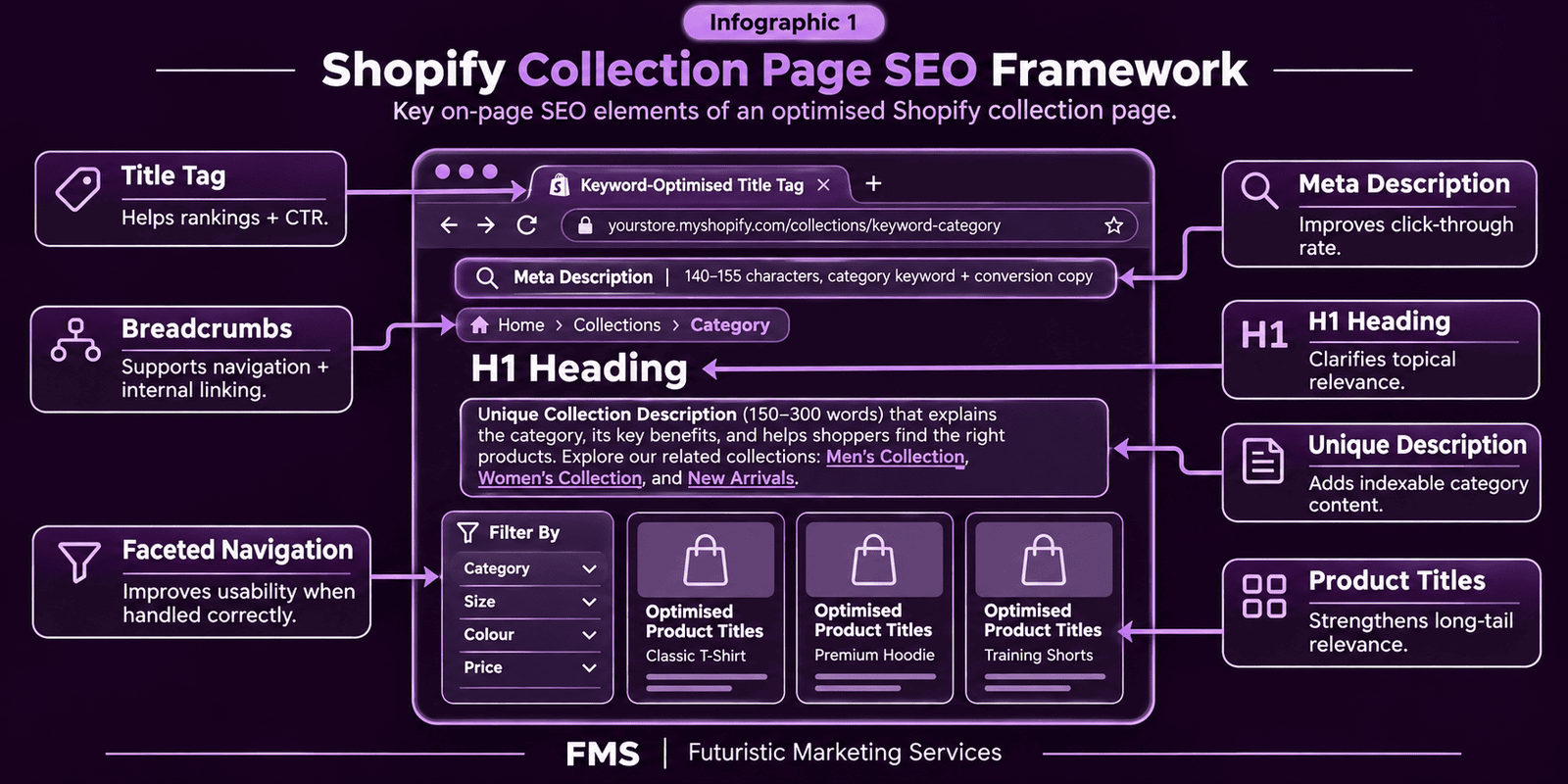
The Collection Page SEO Framework
| Element | Requirement | Common Mistake |
|---|---|---|
| Title tag | Primary category keyword + secondary modifier + brand. Example: Running Shoes for Men | Nike, Adidas and More | StoreName | Using only the collection name with no keyword research, missing the exact phrasing buyers use |
| Meta description | 140 to 155 characters including primary keyword and a conversion-motivating description of the selection | Leaving blank, Shopify auto-generates from the collection description which is often not optimised for CTR |
| Collection description (above grid) | 150 to 300 words of unique, keyword-relevant introductory content placed above the product grid, not at the bottom where most visitors never scroll | No description at all, or a one-sentence description that provides no keyword signal or user value |
| H1 heading | Primary category keyword naturally included, Shopify defaults to the collection title which is usually adequate if the collection is named correctly | Collection named for internal reference rather than the keyword buyers use |
| Internal links in description | Link from the description to 2 to 3 related collections using keyword-relevant anchor text | No internal links from collection pages, missing PageRank distribution to related collections |
| Breadcrumb navigation | Home > Category > Sub-category breadcrumb visible above the H1 | Breadcrumbs disabled in theme settings, missing both UX signal and BreadcrumbList schema |
| Product count and filtering | Filter options using the most commercially relevant product attributes (size, colour, brand, price) with SEO-friendly filter UI that does not create parameter URLs | Parameter-based filtering creating hundreds of near-duplicate collection URLs, crawl budget waste |
Product Page SEO
Product Page SEO Requirements
Unique product descriptions
Manufacturer-provided descriptions create duplicate content across all retailers using the same text, none of them rank for the product keyword. Write unique descriptions that expand on the manufacturer copy with: use-case context; material or technical specifications not in the original; customer-relevant details; and language matching how buyers actually search for this product. See our eCommerce SEO guide.
Product schema markup
JSON-LD Product schema with Offer (price, availability, currency) and AggregateRating (rating value, review count) enables price, availability status, and star ratings to appear directly in Google search results before the user clicks. This 20 to 30% CTR improvement is free, it requires correct schema implementation, not additional paid exposure. Most quality Shopify themes include basic Product schema; verify and extend with SEO Manager app.
Optimised product images
Product images are almost always the LCP element on product pages. Convert all product images to WebP; add explicit width and height to all img elements; use descriptive file names (red-running-shoes-mens-size-10.webp not IMG_4521.webp); add relevant alt text describing the product for accessibility and image search. These changes address Core Web Vitals LCP and CLS simultaneously.
Title tag and meta description
Product title tag format: [Product Name], [Key Attribute] | [Brand] | [Store Name]. Include the primary product search term naturally. Meta description: include the product name, key selling point, price range if competitive, and a CTA phrase. Both should be written for click-through rate, not just keyword inclusion.
Internal linking from blog
Link from relevant blog posts to product pages with descriptive anchor text. A buying guide post (Best Running Shoes for Flat Feet) should link directly to relevant product pages. According to Ahrefs, these internal links are among the highest-impact actions for improving product page rankings.
Review acquisition
Product reviews (star ratings and written reviews) directly affect organic CTR through AggregateRating schema rich results in SERPs. They also provide unique, product-specific content that differentiates your product page from competitor listings. Install Judge.me or Okendo and configure automated post-purchase review request emails.
Shopify Blog SEO: Driving Internal Link Equity to Collections
Shopify Content
Shopify SEO Content Strategy That Compounds Month Over Month
Futuristic Marketing Services develops Shopify SEO content strategies, collection page optimisation, blog content planning, internal linking architecture, and monthly performance monitoring.
Start Your Shopify SEO ProgrammeFrequently Asked Questions About Shopify SEO
Is Shopify good for SEO?
What are the best Shopify SEO apps?
How do I optimise Shopify collection pages for SEO?
How do I add schema markup to Shopify?
Does Shopify automatically generate meta descriptions?
How do I improve Shopify site speed for SEO?
What is the Shopify URL structure for SEO?
How does the Shopify blog help SEO?
Does Shopify handle duplicate content automatically?
Should I use Shopify SEO apps?
How long does Shopify SEO take to show results?
What are the biggest Shopify SEO mistakes?
What are the best search engine optimization agencies?
What are top rated SEO agencies for small businesses?
What are top SEO agencies in the USA?
What are the best SEO companies in 2024?
How do SEO agency reviews help in choosing the best agency?
What are top-rated white hat SEO agencies in 2025?
What are the biggest SEO companies?
How can I compare top SEO agencies?
What are the best SEO optimization companies?
What are the best search engine optimization services?
What are top search engine optimization companies?
What are reputable SEO companies?
What are enterprise SEO agencies with the best reviews?
What are search engine optimization firms?
What are top local search engine optimization agencies?
What are the best affordable SEO agencies?
What are the best SEO company reviews to consider?
Futuristic Marketing Services
Shopify SEO That Compounds Into Organic Revenue
Futuristic Marketing Services implements the complete Shopify SEO stack, collection page content, product schema, performance optimisation, blog content strategy, and monthly rank monitoring, for Shopify stores ready to grow through organic search.
Start Your Shopify SEO Programme