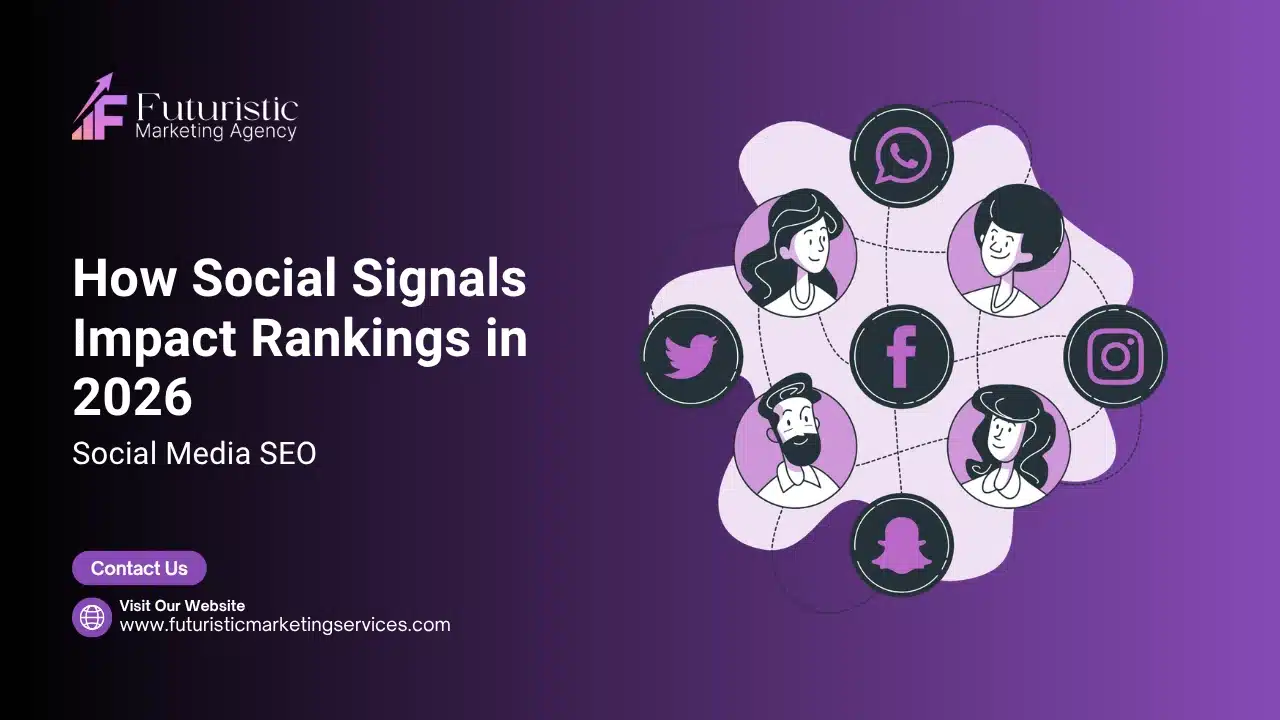
4.9B social media users worldwide — the world’s largest content distribution network (Statista 2026) | No social signals are NOT a direct Google ranking factor — confirmed by Google (Google) | 7 indirect ways social media activity consistently supports SEO performance (FMS Framework) | YouTube is the world’s 2nd largest search engine and a direct SEO ranking opportunity (Alexa / Similarweb) |
Introduction: The Nuanced Truth About Social Media and SEO
The relationship between social media and SEO is one of the most persistently misunderstood topics in digital marketing. On one side are those who claim social signals are a direct ranking factor , that Facebook likes and Twitter shares boost your Google rankings. On the other are those who dismiss social media’s SEO value entirely, pointing to Google’s official statements that social signals are not part of its ranking algorithm.
The truth is more nuanced and, when properly understood, more actionable than either extreme. Social signals , individual likes, shares, and comments , are not direct ranking signals in Google’s algorithm. Google has confirmed this repeatedly. However, social media activity consistently and measurably influences SEO performance through multiple indirect mechanisms: it accelerates content discovery and indexation, drives the referral traffic that generates early engagement signals, expands the audience that discovers and shares content (leading to earned backlinks), builds brand awareness that increases branded search volume, and directly drives traffic to your website that complements organic search.
Additionally, certain social platforms have their own search engines that represent significant organic discovery opportunities entirely distinct from Google. YouTube is the world’s second-largest search engine. LinkedIn content ranks in Google. Pinterest drives substantial image-based organic traffic. TikTok’s search function is rapidly becoming a primary discovery channel for younger audiences.
This guide untangles the social-SEO relationship clearly: what social media does and does not do for SEO, the seven indirect mechanisms through which social activity consistently helps rankings, how to optimise your presence on the platforms that matter most for SEO, and how to build an integrated social and SEO strategy that makes both channels more effective than either alone.
What You Will Learn The definitive answer: do social signals directly affect Google rankings? The 7 indirect mechanisms through which social media consistently helps SEO. Platform-by-platform social SEO guide: YouTube, LinkedIn, Twitter, Pinterest, Instagram. How branded search growth from social activity supports domain authority. Social media’s role in link acquisition and digital PR amplification. The integrated social-SEO strategy framework. 10-point social media SEO checklist and 10 comprehensive FAQs. |
Section 1: Do Social Signals Directly Affect Google Rankings?
This is the most important question in social media SEO , and it has a clear answer: No. Social signals (likes, shares, retweets, comments) are not direct ranking factors in Google’s algorithm. Google has confirmed this through multiple official statements, including Gary Illyes confirming in 2016 that Google does not use social signals, and John Mueller reconfirming this position repeatedly since.
The technical reasons are sound: social media platforms regularly block Google’s crawlers (Googlebot cannot crawl most Facebook or Instagram content), social engagement numbers are easily manipulated (making them unreliable as quality signals), and the correlation between social shares and rankings is explained by the underlying content quality , good content gets shared AND ranks well, but the shares themselves do not cause the rankings.
The Correlation vs Causation Clarification Studies that show a correlation between social shares and higher rankings have confused correlation with causation. High-quality content earns both social shares (because people find it valuable) AND high rankings (because Google finds it authoritative). The social shares did not cause the rankings , the content quality caused both. This does not mean social media is irrelevant to SEO; it means the relationship is indirect rather than direct. Understanding this distinction is what allows you to use social media strategically for SEO rather than chasing vanity metrics. |
What Google Does Use (That Social Correlates With)
While social signals themselves are not ranking factors, several things that social media activity generates ARE relevant to SEO:
- Backlinks: When content is widely shared on social media, more people discover it and some of those people link to it from their own websites , these editorial backlinks are ranking factors
- Branded search: Social media brand building increases searches for your brand name , branded search growth signals to Google that you are a recognised, trustworthy entity
- Referral traffic: Social traffic to your pages generates the engagement signals (dwell time, return visits, multi-page sessions) that Google uses as indirect quality indicators
- Content indexation speed: Widely shared content is crawled and indexed faster because more external pages link to it more quickly
Section 2: The 7 Indirect Mechanisms Through Which Social Media Helps SEO
M1 | Accelerated Content Discovery | When you share new content on social media, your followers encounter it immediately , some will link to it from their own sites, triggering backlink acquisition that accelerates Google’s indexation and authority assessment. Content that goes undistributed after publication can take weeks to be discovered organically; content shared on social platforms with active audiences gets discovered within hours. |
M2 | Link Acquisition Amplification | Social distribution dramatically widens the audience of content creators, journalists, and bloggers who might link to your content. A blog post shared with 10,000 LinkedIn followers reaches a fundamentally different audience than one that sits quietly on your site. Every additional person who discovers and reads your content increases the probability that a content creator in your niche will link to it from their own work. |
M3 | Branded Search Volume Growth | Consistent social media brand building increases the number of people who search for your brand by name in Google. This branded search growth matters for SEO because Google treats high branded search volume as a trust signal , brands that many people search for directly are demonstrably known and recognised entities. Growing branded impressions and clicks in Google Search Console is one of the clearest indicators of brand authority building through social media. |
M4 | Digital PR and Journalist Reach | Journalists and editors are disproportionately active on Twitter/X and LinkedIn. A well-crafted social post sharing your original data or expert insight can reach journalists who will then cover your story and link to your site. This is the social-to-digital-PR pipeline: social distribution reaches journalists, journalists write coverage, coverage earns editorial backlinks. The most effective digital PR practitioners use social media as an amplification layer for every campaign. |
M5 | Content Engagement Signals | Traffic from social media to your website generates the user behaviour signals that Google uses as indirect quality indicators. When social visitors spend significant time on your content, read multiple pages, and do not immediately bounce back to search, these engagement patterns reinforce Google’s assessment of your content quality. The key is ensuring that social-driven traffic arrives at well-matched content , social posts should promise exactly what the linked page delivers. |
M6 | E-E-A-T External Validation | Google’s E-E-A-T evaluation looks at external recognition of your expertise and authoritativeness. A LinkedIn profile with 15,000 followers in your industry, a Twitter presence where you are regularly retweeted by industry publications, and a YouTube channel with a substantial subscriber base all contribute to the external recognition signals that reinforce your E-E-A-T standing. Being a recognised figure in your field’s social ecosystem is increasingly part of what Google’s quality evaluation systems look for. |
M7 | Audience Research and Content Intelligence | Social media provides real-time intelligence about what your target audience cares about, what questions they are asking, and what content formats resonate with them. This intelligence directly improves your SEO content strategy: the most popular and engaged content on your social channels reveals which topics your audience most wants to consume, helping you prioritise your content calendar for maximum organic performance. |
Section 3: Platform-by-Platform Social SEO Guide
Different social platforms offer different SEO benefits and require different optimization approaches. Here is the complete breakdown:
YouTube , The Second Search Engine
YouTube is the world’s second-largest search engine, with over 2 billion logged-in users per month. YouTube SEO is a distinct discipline from Google SEO but shares core principles: keywords, relevance, and engagement signals determine rankings within YouTube’s search results. Critically, YouTube videos also rank directly in Google’s web search results , particularly for queries where Google identifies video as the preferred content format.
YouTube SEO Optimization Checklist
Title optimization: , Include primary keyword in first 60 characters , Use natural, compelling phrasing , not keyword stuffing , Format: ‘Primary Keyword: Specific Benefit | Brand’
Description optimization: , First 2-3 sentences (visible without ‘Show more’) must hook , Include primary keyword in first 100 characters , Add full description of 200-500 words with secondary keywords , Include timestamps, links to related videos, and website URL
Tags: , 5-10 tags combining exact-match, broad, and niche variants , Use YouTube’s autocomplete to find tags users search
Chapters (timestamps): , Add timestamp chapters for videos over 5 minutes , Chapters appear in Google search results as video highlights , Use keyword-rich chapter titles
Thumbnail: , Custom thumbnail with clear text, strong visual contrast , Face with expression outperforms graphics for most topics , Consistent style across channel builds recognition
Engagement signals (YouTube ranking factors): Watch time, click-through rate on thumbnail, comments, likes, shares, subscribe rate , all influence YouTube rankings |
LinkedIn , Professional Authority and Google Rankings
LinkedIn content is indexed by Google and can rank in search results for professional and B2B-related queries. A well-optimised LinkedIn profile or article can appear in Google results for branded name searches, industry topic searches, and professional credential queries. LinkedIn also builds the personal and brand authority signals that strengthen E-E-A-T for B2B companies.
- LinkedIn profile SEO: complete your headline and About section with natural keyword usage , these sections are indexed by Google; a well-written LinkedIn profile ranking in Google for your name is a valuable brand asset
- LinkedIn articles (long-form): comprehensive articles published on LinkedIn can rank in Google for industry keywords, particularly lower-competition informational queries; they also earn backlinks from people who share them externally
- LinkedIn company page: optimise with keyword-rich description, industry category, and regular posts; company pages rank in Google for brand searches and provide valuable brand search real estate
- Social proof for E-E-A-T: endorsements, recommendations, and follower count on LinkedIn contribute to the external recognition that strengthens author authority signals , particularly valuable for YMYL and expert-driven content
Twitter/X , Speed and Journalist Reach
Twitter/X is indexed by Google through a direct partnership , recent tweets from public accounts can appear directly in Google search results for brand queries and trending topics. Its primary SEO value is speed (real-time content reaches journalists rapidly) and journalist reach (press, editors, and industry influencers are disproportionately active on Twitter).
Twitter/X SEO Value | How to Maximise It |
Google indexes recent tweets from public accounts | Maintain a public account; tweet about your primary topic keywords; your recent tweets may appear in branded searches |
Reaches journalists for digital PR amplification | Share original research and data studies; tag relevant journalists and publications; use industry hashtags to extend reach |
Accelerates content discovery and link acquisition | Share every new content piece with a compelling hook; threads about key findings drive more engagement than single-link posts |
Industry credibility and E-E-A-T signals | Consistent expert commentary on trending topics builds recognition as an industry voice , referenced in other people’s content |
Pinterest , Visual SEO and Long-Tail Image Traffic
Pinterest functions as a visual search engine with significant organic discovery potential, particularly for lifestyle, e-commerce, food, fashion, home design, and DIY content. Pinterest content appears in Google image search results, and Pinterest itself has a strong SEO-like algorithm based on keywords, pin quality, and engagement. For businesses in visually-oriented industries, Pinterest can drive substantial referral traffic.
- Pin descriptions: treat as SEO meta descriptions , include primary and secondary keywords naturally in 100-300 character descriptions
- Board titles and descriptions: optimise with keyword-rich names that reflect the content type and target audience interest
- Alt text on images: Pinterest reads image alt text , write descriptive, keyword-rich alt text on every image pinned from your site
- Rich Pins: enable Rich Pins for your website to automatically pull metadata (title, description, price for products) into pins , improves pin quality and click-through rate
Instagram , Brand Awareness and Profile SEO
Instagram content is not indexed by Google in the same way as other platforms , posts and captions are largely inaccessible to search crawlers. Instagram’s primary SEO value is brand awareness building, which drives branded search growth and direct traffic that complement organic search performance. However, Instagram profile pages and some content do appear in Google results for brand searches.
- Instagram profile optimization: your username and bio are indexed by Google , include your brand name and a natural description of what you do in the bio for branded search value
- Brand awareness to branded search pipeline: a strong Instagram following builds brand recognition that translates into branded Google searches , track this relationship by monitoring branded impressions in GSC alongside Instagram follower growth
- Link in bio strategy: use a link-in-bio tool (Linktree or direct URL) to drive traffic to your highest-converting pages , Instagram traffic that engages with your SEO content generates quality signals
Section 4: Social Profiles in Google SERPs , Claiming Your Brand SERP
When someone searches for your brand name in Google, the results page they see , your ‘Brand SERP’ , is prime digital real estate that shapes first impressions. Well-optimized social profiles claim multiple positions on your Brand SERP, presenting a cohesive, authoritative brand presence across platforms.
Brand SERP Optimisation , Social Profile Strategy
Position 1: Your website (homepage or brand page) Position 2-3: Your most authoritative social profiles LinkedIn company page typically ranks #2 for most B2B brands Twitter/X profile commonly appears for brands with active accounts YouTube channel ranks for brands with video content
Optimisation steps for each social profile:
Profile name: EXACT match to your brand name (consistency matters , ‘FMS’ and ‘Futuristic Marketing Services’ should both clearly be the same entity)
About/Bio: Include brand name naturally in the first sentence Include primary service/product keyword Include location for local businesses Include website URL
Profile completion: 100% complete on every platform Empty fields are indexability opportunities left on the table
Activity consistency: Inactive profiles ranked below active ones Regular posting signals that profiles are maintained
Cross-linking: Link every social profile to your website These links may be nofollow but strengthen entity associations
Schema: Implement sameAs links in your Organisation schema pointing to all verified social profiles , tells Google explicitly these are your official accounts |
Section 5: The Integrated Social Media and SEO Strategy
The most effective approach treats social media and SEO as mutually reinforcing channels operating on a unified content strategy rather than parallel but disconnected programmes. Here is the integrated framework:
The Unified Content Distribution Model
Unified Content Distribution , Publish Once, Distribute Many Step 1: Create the SEO-optimised core content asset Long-form blog post targeting defined keyword Comprehensive, intent-matched, expert-authored Step 2: Extract social-native content from the core asset LinkedIn: 300-word summary of key insight + link Twitter/X: Thread of 5-8 key takeaways with visuals Instagram: Key statistic or quote as visual + bio link Pinterest: Infographic or key data visualisation YouTube: Expand into video tutorial (if applicable) Step 3: Time the distribution for maximum impact Day 1: Publish blog + submit to GSC for indexing Day 1-2: LinkedIn article and company post Day 2-3: Twitter thread Day 3-5: Email newsletter to subscribers Day 5-7: Instagram + Pinterest (visual adaptations) Day 14+: Reshare on social channels with updated angle Step 4: Monitor and capture distribution value Track referral traffic from each platform in GA4 Monitor new backlinks in Ahrefs (from shares → links) Watch for journalist pick-ups via Google Alerts Result: One content investment delivers organic traffic (SEO), social engagement, email subscribers, and backlink acquisition simultaneously , maximising the ROI of every content piece. |
Social Media as a Content Intelligence Tool for SEO
Social media platforms provide real-time audience intelligence that improves SEO content strategy. Implement these intelligence gathering habits:
- Monitor which social posts generate the highest engagement , the topics and angles that resonate socially almost always also perform well as SEO content
- Watch industry hashtags and trending topics on Twitter/X and LinkedIn to identify emerging search queries before they appear in keyword tools
- Track competitor social content , what their most shared content reveals about audience demand in your niche
- Use social comments and DMs as content research , questions your audience asks directly are keyword research data you cannot find in any tool
- Monitor YouTube auto-suggest and YouTube search volume (via vidIQ or TubeBuddy) for video content opportunity discovery
Section 6: Measuring the SEO Impact of Social Media
Because social media’s SEO influence is indirect, measuring its impact requires tracking the downstream SEO effects of social activity rather than social metrics themselves:
What to Measure | Tool | Social-SEO Connection |
Branded search impressions + clicks | GSC > Performance > filter brand keywords | Branded search growth correlates directly with social brand awareness |
Referral traffic from social platforms | GA4 > Acquisition > Referral > filter platform | Confirms social distribution is driving engaged visitors |
Time to first backlink after publish | Ahrefs New Backlinks > sort by date | Social distribution shortens time-to-first-link significantly |
New backlinks earned in 30 days post-publish | Ahrefs Backlinks filter by date | Social amplification increases link acquisition velocity |
YouTube video rankings in Google | GSC > Performance > search type: Video | YouTube SEO content appearing in Google web search |
LinkedIn article organic visibility | LinkedIn Analytics > search appearances | LinkedIn content indexed and visible in Google for professional queries |
Brand SERP social profile positions | Manual Google search for brand name | How many SERP positions your social profiles occupy for branded searches |
The Branded Search Tracking Method: Set up a dedicated GSC filter for your exact brand name and key brand variants. Track branded impressions and clicks month-over-month. If branded search is growing while you are running active social campaigns, this correlation confirms that your social presence is building the brand recognition that translates into Google authority signals. A 20-30% year-over-year increase in branded search volume is a strong indicator of successful brand authority building through social channels. |
Section 7: 6 Social Media SEO Mistakes to Avoid
Mistake | Why It Fails | Fix |
Expecting social shares to directly improve Google rankings | Social signals are not direct ranking factors , this belief leads to prioritising social vanity metrics over actual SEO outcomes | Focus on the indirect mechanisms: backlink acceleration, branded search, and referral traffic , measure those instead |
Treating social media and SEO as completely separate strategies | Disconnected programmes miss the compounding synergies , content created for SEO is not distributed socially; social insights are not used to inform SEO content decisions | Build a unified content distribution workflow; share keyword research with social team; share social performance data with SEO team |
Ignoring YouTube as an SEO channel | YouTube is the second-largest search engine , treating it as only ‘social’ misses the organic search opportunity within YouTube and Google video results | Build a YouTube SEO strategy: keyword-research video topics, optimise titles/descriptions/chapters, aim for Google video carousel rankings |
Publishing incomplete or inconsistent social profiles | Incomplete profiles rank lower in both platform search and Google; inconsistent brand naming fragments entity signals | Complete 100% of all social profile fields; use exact brand name consistently; link every profile to your website |
Sharing all content on all platforms with identical messaging | Each platform’s algorithm rewards native content formats , repurposing the same post everywhere produces poor engagement on all platforms | Create platform-native content: LinkedIn articles, Twitter threads, Instagram visuals, YouTube tutorials , adapted from the same core content but formatted for each platform |
Measuring social SEO success by likes and followers alone | Vanity metrics do not correlate with SEO outcomes; a small highly-engaged audience in your niche is more valuable than a large unrelated following | Measure branded search growth, referral traffic quality, backlinks from social-shared content, and LinkedIn/YouTube organic search visibility |
10-Point Social Media SEO Checklist
Done | Social Media SEO Item |
☐ | All social profiles 100% complete with exact brand name, keyword-rich bio/description, website URL, and consistent branding across platforms |
☐ | Organisation schema on website includes sameAs links to all verified social profiles , tells Google which accounts are officially yours |
☐ | Content distribution workflow in place: every new blog post shared across LinkedIn, Twitter/X, and relevant platforms within 48 hours of publish |
☐ | YouTube channel exists if video content is relevant to your niche , titles, descriptions, and chapters optimised for YouTube search keywords |
☐ | LinkedIn personal profile and company page optimised with industry keywords , both indexed by Google for branded and professional searches |
☐ | Branded search tracked monthly in GSC: impressions and clicks for brand name queries monitored as proxy for social brand awareness growth |
☐ | Referral traffic from social platforms tracked in GA4: engagement rate of social visitors compared to organic , quality check on distribution targeting |
☐ | New backlinks tracked after each major content publish: Ahrefs monitored for links earned within 30 days as measure of social amplification impact |
☐ | Google Alerts set for brand name and key spokespeople: journalist pick-ups from social-amplified content captured for link reclamation |
☐ | Social content intelligence flowing into SEO: top-performing social posts reviewed monthly to inform next quarter’s SEO content calendar |
Social Media SEO: Do's and Don'ts
DO | DON’T |
Use social media to accelerate content discovery and link acquisition , it shortens time-to-first-backlink dramatically | Expect social shares to directly improve Google rankings , they are not a ranking signal; the benefit is indirect |
Treat YouTube as a search engine with its own SEO strategy, not just a social platform | Upload videos to YouTube without keyword optimisation , untitled, undescribed videos earn almost no organic YouTube or Google visibility |
Build a unified content distribution workflow: SEO content → social adaptations → email → community sharing | Create completely different content for SEO and social , the same research should power both through format adaptation |
Complete and optimise every social profile fully , they rank in Google for branded searches and build entity signals | Leave social profiles incomplete or inconsistent across platforms , inconsistency fragments your brand entity signals |
Track branded search growth in GSC as the primary measure of social brand awareness ROI | Measure social SEO success only by likes and follower counts , branded search growth is the most direct link to SEO value |
Use social media audience intelligence to inform your SEO content calendar , social engagement reveals what your audience most wants to read | Keep social and SEO teams siloed , social performance data is valuable SEO keyword and topic research |
Implement sameAs schema linking to all official social profiles from your website | Ignore schema connections between your website and social profiles , explicit entity associations strengthen Google’s understanding of your brand |
Share social audience data with the SEO team and GSC ranking data with the social team , both teams make better decisions with combined data | Manage social and SEO as completely separate channels with separate strategies and separate measurement , integration produces compound results neither achieves alone |