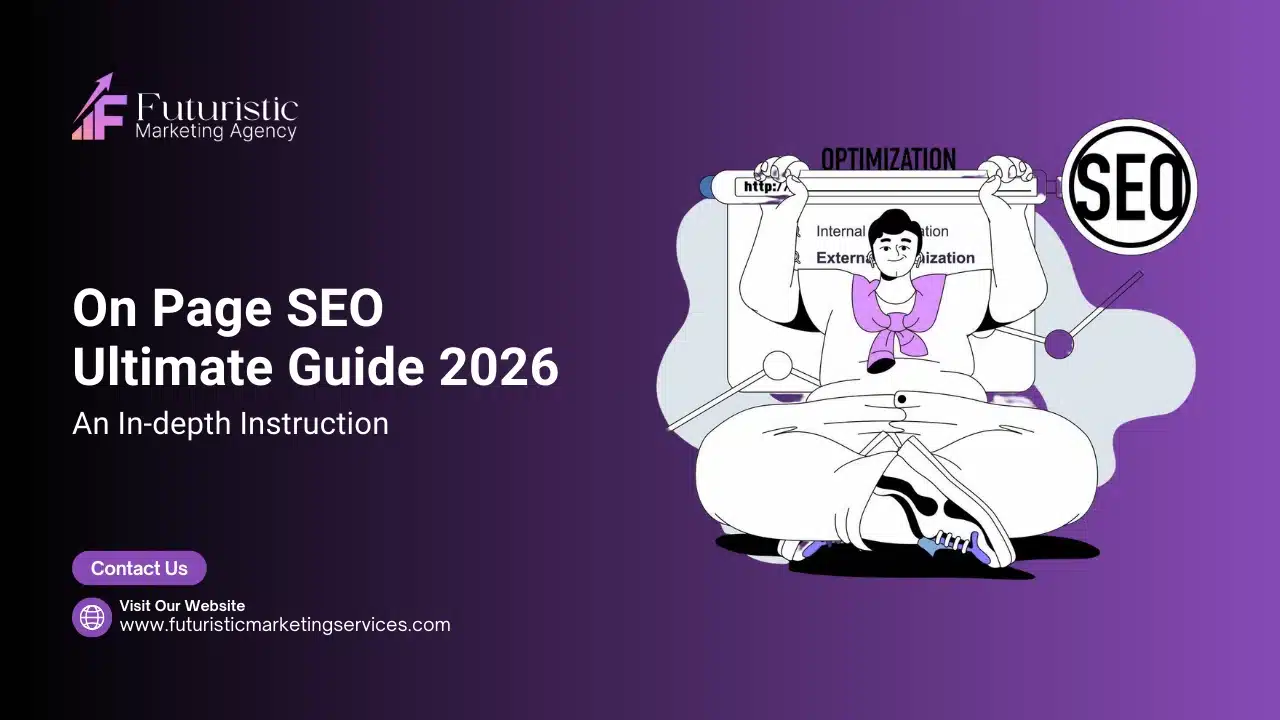
You have built your website. You have published your content. Now you are waiting for Google to send you traffic – but nothing is happening. The problem is almost never the content itself. The problem is almost always on-page SEO – the dozens of technical and content signals on your own pages that tell Google exactly what each page is about, why it is valuable, and who it should be shown to.
On-page SEO is the practice of optimizing every element within a web page – title tags, meta descriptions, headings, content, images, internal links, URL structure, and more – so that search engines can clearly understand your page and rank it for the right queries. Unlike off-page SEO (which depends on external factors like backlinks), on-page SEO is entirely within your control.
The good news: on-page SEO is learnable, actionable, and delivers results you can measure directly. A single afternoon of on-page improvements to an existing page can move it from position 15 to position 5 – the difference between 2% of clicks and 20%.
This complete guide covers every on-page SEO element that matters in 2026 – from title tags and content depth to Core Web Vitals, search intent alignment, and optimizing for AI-powered search. Follow the on-page SEO checklist at the end and your pages will be fully optimized before they go live.
27.6% of all clicks go to Google’s #1 organic result – on-page SEO determines whether you get there (Backlinko, 2026) | 200+ ranking signals in Google’s algorithm – on-page elements control the majority you can directly influence | 53% of all website traffic globally comes from organic search – on-page SEO is the gateway (BrightEdge, 2026) | 33% of websites pass all Core Web Vitals thresholds – the most overlooked on-page technical factor (Ahrefs, 2026) |
What Is On-Page SEO? (Definition)
On-page SEO (also called on-site SEO) refers to all the optimizations you make directly on your web pages to improve their visibility and ranking in search engine results. It includes both the content your visitors read and the HTML source code that search engines scan.
Think of on-page SEO as making your page as easy as possible for both humans and search engines to understand. When Google’s crawlers visit your page, they read your title tag, scan your headings, evaluate your content’s depth and relevance, check your image alt text, follow your internal links, and measure how quickly the page loads. Every one of these signals influences how and where Google ranks your page.
On-Page SEO vs. Off-Page SEO vs. Technical SEO |
On-Page SEO: Elements you control on the page itself – content, keywords, headings, internal links, image alt text, meta tags, URL structure. |
Off-Page SEO: External signals like backlinks from other websites, brand mentions, and digital PR. You influence these, but cannot directly control them. |
Technical SEO: The infrastructure layer – site speed, mobile-friendliness, indexability, structured data, Core Web Vitals. Overlaps with on-page but focuses on technical performance rather than content. |
All three work together. On-page SEO is the best starting point because it is 100% within your control and directly communicates your topic and value to Google. |
The 10 Core On-Page SEO Elements - Overview
On-page SEO is not one thing – it is a collection of specific, interdependent elements. Here is a complete overview of the ten most important on-page factors you must optimise for every page you publish:
TITLE TAG Highest Impact The clickable headline in search results. Must contain primary keyword, be 50–60 chars, and be compelling enough to earn the click. | META DESC CTR Booster 150–160 char summary below title in SERPs. Influences click-through rate – a major indirect ranking signal. | CONTENT Most Important Depth, accuracy, topical coverage, search intent match, and originality. The most weighted on-page factor in 2026. | INTERNAL LINKS Authority Distributor Links between your own pages. Passes PageRank, helps Google discover all content, and signals topic relationships. |
1. Title Tags - Your Most Important On-Page Element
Your title tag is the single most impactful on-page SEO element. It is the clickable headline that appears in Google search results, and it tells both Google and the searcher what your page is about. Google has also confirmed that the title tag is one of the most important keyword placement signals in its algorithm.
Title Tag Best Practices for 2026
- Length: Keep title tags between 50–60 characters. Longer titles get cut off in search results with "..." which can hurt CTR and waste your keyword signal.
- Keyword placement: Place your primary keyword as close to the beginning as naturally possible. Google weights earlier keyword placement more heavily in the title.
- Uniqueness: Every page on your site must have a unique title tag. Duplicate titles confuse Google and prevent proper ranking of either page.
- Compelling hooks: Include power words like "Complete Guide," "Ultimate," "Step-by-Step," "2026," or "How to" - these increase CTR and therefore indirectly boost rankings.
- Brand inclusion: Many SEOs append the brand name at the end: "On-Page SEO Guide - Futuristic Marketing Services." This helps brand recognition but reduces space for keywords.
|
| Why It’s Better |
“SEO Tips” | “On-Page SEO: 10-Point Checklist to Rank Higher in 2026” | Keyword at start, specific, power word, year – 55 chars |
“Blog Post About Meta Descriptions” | “Meta Description SEO: How to Write One That Gets Clicks” | Primary keyword first, clear benefit, compelling hook |
“Website Optimization” | “On-Page SEO Guide: Optimize Every Page for Google in 2026” | Specific topic, primary keyword, clear scope and recency |
“How To Do On Page SEO Properly For Your Website Blog Posts” | “How to Do On-Page SEO: Complete Step-by-Step Guide (2026)” | Same intent but trimmed to 52 chars, year added, cleaner |
 Weak Title Tag
 Optimised Title Tag
|
Google rewrites approximately 61% of title tags that are too long, too short, keyword-stuffed, or misaligned with the page’s content (Portent, 2024). If Google is rewriting yours, it means your title tag does not accurately reflect what the page actually covers. Fix this by aligning your title tightly with your H1 and first 100 words. |
 Warning: Google Rewrites Titles
2. Meta Descriptions - Maximize Click-Through Rate
Your meta description is the short paragraph of text that appears below your title tag in search results. While meta descriptions are not a direct ranking signal (Google confirmed this), they have a powerful indirect effect: they determine whether someone clicks your result or scrolls past it.
A high click-through rate (CTR) tells Google your page is relevant and appealing to searchers – which is a ranking signal. Low CTR, even at position 3, can cause Google to gradually demote your ranking. Investing in compelling meta descriptions is not optional – it’s one of the highest-leverage on-page actions available.
How to Write a High-CTR Meta Description
- Length: Keep between 150–160 characters. Longer descriptions are truncated in search results
- Include primary keyword: Google bolds keywords in meta descriptions that match the user's search query, making your result more visually prominent.
- Lead with the value proposition: State what the reader will get from your page in the first sentence.
- Include a clear CTA: "Learn how," "Discover," "Get the complete guide," "Find out" - these drive clicks.
- Match search intent: If the search intent is informational, your meta description should promise information. If commercial, highlight your offer.
- Make it unique: Every page needs a different meta description. Duplicated descriptions are flagged by Google Search Console.
Meta Description Element | Example | Why It Works |
Primary keyword early | “On-page SEO is how you optimise each page…” | Google bolds this in SERPs, increasing visual prominence |
Clear benefit | “…learn exactly which 10 elements to optimise to rank higher” | Reader knows precisely what they will get |
Specific + compelling | “…with our 2026 checklist used by 500+ businesses” | Social proof and recency reduce hesitation to click |
CTA at end | “Start optimising your pages today – it’s free.” | Action-oriented ending drives the click decision |
3. Headings (H1, H2, H3) - Structure Your Content for Google and Users
Headings serve two simultaneous purposes: they give your readers a scannable content structure, and they signal to Google the hierarchy and key topics of your page. Google uses headings to understand which subtopics a page covers, which informs how it ranks the page for secondary and related keywords.
H1 Tag - Your Page's Primary Identity
Every page must have exactly one H1 tag. Your H1 is the main headline visible on the page (not the title tag in the browser tab – though they are often similar). Google treats the H1 as the strongest content signal about what the page is about.
- Include your exact primary keyword in the H1 - ideally matching or very close to your title tag
- Make it descriptive and compelling - your H1 is the first thing visitors read after clicking
- Keep it under 70 characters if possible - concise headings are clearer for both users and crawlers
- Never use your H1 for decorative purposes - it must reflect the page's primary topic
H2 Tags - Your Primary Section Dividers
H2 headings are your main section headings. Each H2 should represent a distinct subtopic of your primary keyword. Think of each H2 as a chapter title in your content. Google reads H2s to understand the scope of coverage – pages with comprehensive H2 coverage of a topic tend to rank better than pages that cover fewer angles.
- Include primary or secondary keywords in at least 2–3 H2s naturally
- Use H2s to answer questions your target audience is asking - base them on "People Also Ask" results
- Each H2 section should be self-contained and substantive (not just a sentence or two)
H3 Tags - Subtopics Within Sections
H3 headings provide further structure within H2 sections. They are especially valuable for long-form content where each major section (H2) contains multiple distinct points. H3s are useful for lists, step-by-step instructions, and product features where parallel structure aids comprehension.
Key Insight: Topical Coverage Is the #1 On-Page Factor in 2026 |
A study by Surfer SEO analyzing 1 million search results found that topical coverage – the depth and breadth of entities, facts, and subtopics covered in a page – has become the most important on-page ranking factor in 2026. Pages that comprehensively cover a topic from multiple angles consistently outrank pages that cover the same topic superficially, regardless of keyword density. This is exactly what your H2/H3 structure shapes. |
– Surfer SEO 1 Million SERP Study (2026) |
4. URL Structure - Short, Keyword-Rich, Clean
Your URL (the web address of each page) is a small but important on-page SEO signal. A clean, keyword-rich URL helps Google understand page context and improves click-through rates because URLs appear in search results and users judge them for trustworthiness.
Rule |
|
|
Include primary keyword | /page?id=4738 | /on-page-seo-guide/ |
Keep it short | /blog/2026/march/the-ultimate-comprehensive-guide-to-on-page-seo-optimization/ | /Blogs/seo/on-page-seo-guide/ |
Use hyphens (not underscores) | /on_page_seo_checklist | /on-page-seo-checklist |
All lowercase | /On-Page-SEO-Guide | /on-page-seo-guide |
Remove stop words | /what-is-the-best-way-to-do-seo | /on-page-seo-best-practices |
Use your site structure | /random-page/seo | /Blogs/seo/on-page-seo-guide/ |
An important 2026 note: Surfer SEO’s 1-million SERP study found that keywords in the URL path (the slug after the domain) now show almost no ranking correlation – it has become table stakes. However, a clean, logical URL structure still matters for user trust, analytics clarity, and internal linking coherence. Never sacrifice URL clarity for keyword stuffing.
5. Content Quality and Search Intent - The Most Important On-Page Factor
If you only have time to optimize one on-page element, make it your content. According to First Page Sage’s Q1 2026 Google algorithm study, high-quality, relevant content is the #1 ranking signal – and has been for several years. No amount of perfect title tags, clean URLs, or internal links can compensate for weak or irrelevant content.
Understanding Search Intent - The Most Critical Content Decision
Before writing a single word, you must understand the search intent behind your target keyword. Search intent is the underlying reason a person typed that query. Google’s algorithms are now highly sophisticated at detecting whether your content matches the dominant intent for a search – and pages that mismatch intent rarely rank, even with perfect technical optimization.
Intent Type | What the User Wants | Content Format Required | Example Query |
Informational | Learn or understand something | Blog post, guide, tutorial, FAQ | “what is on-page seo” |
Navigational | Find a specific website or page | Brand page, landing page | “Ahrefs on-page seo checker” |
Commercial | Research options before deciding | Comparison article, review, list | “best on-page seo tools 2026” |
Transactional | Ready to purchase or sign up | Service/product page, CTA-focused page | “on-page seo service pricing” |
How to identify search intent: Google the keyword you want to rank for. Look at the top 5 results. Are they blog posts, videos, product pages, or comparison articles? That mix tells you exactly what format Google wants to see for that query. Matching the dominant content format is non-negotiable.
Content Quality Standards for 2026
Google’s Helpful Content System (previously the Helpful Content Update) now runs continuously and at the site level. Low-quality, thin, or AI-generated content with no added value actively suppresses your entire domain’s visibility. Here is what Google’s quality raters and algorithm look for:
- Depth and comprehensiveness: Cover the topic thoroughly. The average top-ranking page for competitive keywords covers 1,447+ words (Backlinko), but word count is secondary to topical completeness. Cover all the key subtopics a searcher would expect.
- Originality and information gain: Add something that competitors haven't covered - unique data, case studies, original analysis, first-hand expertise. Google's algorithm increasingly rewards "information gain."
- E-E-A-T signals: Show Experience (first-hand knowledge), Expertise (depth), Authoritativeness (recognition from others), and Trustworthiness (accuracy, citations, security). Author bios, cited statistics, and external links to authoritative sources all strengthen E-E-A-T.
- Readability: Use short paragraphs (2–4 sentences), scannable subheadings, numbered lists for processes, and bullet points for features. Content that is easy to skim retains users longer - which signals quality to Google.
-
Content freshness: Outdated content loses rankings. Update your most important pages every 3–6 months. Add the current year to time-sensitive titles (e.g. "On-Page SEO Guide 2026"). First Page Sage's research shows content freshness now affects even transactional keyword rankings.
Research Insight: Topical Coverage Beats Keyword Density
Surfer SEO's 2026 SERP study of 1 million search results found that keyword density now shows near-zero correlation with rankings. What correlated strongly with top positions was topical coverage - how many related entities, subtopics, and facts the page included. A page about "beard grooming tips" that connects "beard conditioner," "beard hair," and "split ends" in contextually meaningful sentences dramatically outperforms a page that merely repeats the keyword phrase.
- Surfer SEO 1M SERP Study, July 2026
6. Keyword Placement - Where Keywords Matter Most
In 2026, keyword density (how many times you use a keyword) has almost zero impact on rankings. What matters is strategic keyword placement – using your primary and secondary keywords in the locations that Google’s crawlers pay most attention to.
On-Page Element | Impact on Rankings | Priority |
Title Tag | ████████████████████████████████░░ | 🔴 Critical |
H1 Tag | ██████████████████████████████░░░ | 🔴 Critical |
First 100 Words | ████████████████████████████░░░░░ | 🔴 Critical |
H2/H3 Subheadings | █████████████████████████░░░░░░░░ | 🟠 High |
Image ALT Text | ██████████████████████░░░░░░░░░░░░ | 🟠 High |
URL Slug | ██████████████████░░░░░░░░░░░░░░░ | 🟡 Medium |
Meta Description | █████████████████░░░░░░░░░░░░░░░░░ | 🟡 Medium (CTR) |
Body Text (naturally) | ███████████████░░░░░░░░░░░░░░░░░░ | 🟢 Standard |
Anchor Text (internal) | █████████████░░░░░░░░░░░░░░░░░░░░ | 🟢 Standard |
Practical rule: Place your exact primary keyword in your title tag, H1, and the first 100 words of your content. After that, use it naturally throughout the body – don’t force it. Use secondary keywords and semantically related terms in your H2s and body text. Never stuff keywords into alt text, URLs, or meta descriptions – it does not help and risks being seen as spam.
7. Image Optimization - ALT Text, File Size, and Format
Images make content more engaging, but unoptimized images are one of the most common causes of slow page speeds – which directly hurts both rankings and user experience. Image SEO covers three distinct areas: alt text (for search relevance), file size (for speed), and file format (for modern browsers).
ALT Text - Describing Images for Search Engines
Alt text (alternative text) is an HTML attribute that describes what an image shows. Since Google cannot “see” images the way humans do, it relies on alt text to understand image content and rank images in Google Image Search. Alt text also improves accessibility for users who rely on screen readers.
- Include primary or secondary keywords naturally: "on-page seo infographic showing title tag optimisation" - describes the image AND includes a keyword
- Be descriptive and specific: Describe exactly what the image shows - don't just use the keyword alone as alt text
- Never keyword stuff alt text: "on-page seo on-page seo optimization on-page checklist" - this is spam and violates Google's guidelines
- Leave decorative images empty: If an image is purely decorative (e.g., a divider line), use alt="" - an empty alt attribute signals to screen readers to skip it
File Size and Format - The Speed Factor
Oversized images are the #1 cause of slow page load times in the majority of websites. Google has made page speed a ranking factor through Core Web Vitals, and LCP (Largest Contentful Paint) is often caused by a large hero image loading slowly.
- Use WebP format: WebP images are 25–35% smaller than JPEG and PNG at equivalent quality. All modern browsers support WebP.
- Compress before uploading: Use tools like Squoosh, TinyPNG, or Imagify to compress images below 200KB for blog posts, below 500KB for hero images
- Specify dimensions: Always add width and height attributes to image HTML tags - this prevents layout shift (CLS) as the page loads
- Use lazy loading: Add loading="lazy" to images below the fold so they only load when the user scrolls to them - reduces initial page load time significantly
8. Internal Linking - Build a Strong Content Architecture
Internal linking is the practice of linking from one page on your website to another page on your website. It is one of the most underused – and most powerful – on-page SEO techniques available to any website owner. Internal links serve two critical functions:
- Pass link equity (PageRank): Internal links distribute ranking authority from high-authority pages (like your homepage or pillar posts) to less-authoritative pages - boosting the linked page's ranking potential
- Help Google discover and index your content: Googlebot follows links to crawl your site. Pages with no internal links pointing to them (orphaned pages) may never be found or indexed
Internal Linking Best Practices
- Use descriptive anchor text: Instead of "click here," use keyword-rich anchor text: "learn how to do a local SEO audit" or "our keyword research guide." Anchor text is a ranking signal for the linked-to page
- Link from relevant content: Internal links should be contextually relevant - link from a page about on-page SEO to your keyword research guide, not to a completely unrelated page
- Aim for 3–6 internal links per post: Enough to create meaningful connections without overwhelming the reader or looking like internal spam
- Link to your most important pages: Your highest-value service pages and pillar content should receive the most internal links from your blog posts
- Fix orphaned pages: Use Google Search Console or a tool like Screaming Frog to identify pages with no internal links - every indexable page should have at least one link pointing to it
Internal linking is how you build your topic cluster architecture – the most effective content strategy for 2026. For a deeper look at this strategy, see our guide on what is SEO and how search engines work.
9. Core Web Vitals and Page Experience - The Technical On-Page Layer
Since 2021, Google has incorporated Core Web Vitals (CWV) as official ranking signals. These metrics measure real-world page experience for users – how fast the content loads, how responsive the page is, and how visually stable it is as it loads. Despite being “technical SEO,” CWV is deeply connected to on-page decisions like image sizes, render-blocking scripts, and layout design.
Core Web Vital | What It Measures | Target Threshold | Key On-Page Causes |
LCP (Largest Contentful Paint) | How fast the main content element loads | Under 2.5 seconds | Large uncompressed images, slow server response, render-blocking CSS/JS |
INP (Interaction to Next Paint) | How quickly the page responds to user interactions | Under 200 milliseconds | Heavy JavaScript, third-party scripts, complex DOM elements |
CLS (Cumulative Layout Shift) | Visual stability as the page loads – does content jump? | Score under 0.1 | Images without dimensions, late-loading ads, dynamic content insertion above fold |
According to Ahrefs’ 2026 data, only 33% of websites pass all three CWV thresholds simultaneously. This means improving your page speed and layout stability gives you a real competitive advantage – most of your competitors are failing at this.
AUDIT Run PageSpeed Insights on every key page – check LCP, INP, CLS scores and identify specific issues | IMAGES Convert to WebP, compress to <200KB, add dimensions, enable lazy loading – fixes most LCP issues | SCRIPTS Defer non-critical JavaScript, remove unused plugins, use a CDN – reduces INP and load time | LAYOUT Specify image/ad dimensions, avoid inserting elements above fold – eliminates CLS completely | VERIFY Re-test in PageSpeed Insights + Google Search Console Core Web Vitals report |
10. On-Page SEO for AI Search in 2026 - AIO, GEO, and Featured Snippets
The rise of Google’s AI Overviews, ChatGPT, Perplexity, and other AI-generated answer engines has added a new dimension to on-page SEO. Traditional on-page optimization remains critical – but additional strategies are needed to ensure your pages are cited in AI-generated answers and appear in featured snippets.
Optimising for Google AI Overviews
Google AI Overviews (formerly SGE) appear above organic results for many informational queries, synthesising answers from multiple web pages. To be cited in AI Overviews, your on-page content must be:
- Clearly structured: Use headers, bullet points, and numbered lists that make it easy for AI to extract specific answers
- Directly answering questions: Include the question as a heading (H2 or H3) followed immediately by a concise, direct answer in the first 1–2 sentences of the section
- Factually authoritative: Cite specific statistics from reputable sources - AI systems favour pages with verifiable, attributed claims
- Schema-marked: Use FAQPage and HowTo schema to help AI tools parse your structured content
Featured Snippets - Position Zero Strategy
Featured snippets are the boxed answers that appear above organic results for many informational queries. Appearing in a featured snippet dramatically increases visibility – even at the cost of some click-through traffic.
- Identify snippet opportunities: Search for your target keyword and check if a snippet box already exists. If it does, you can target it by matching the existing snippet format (paragraph, list, or table)
- Structure your answer for extraction: For paragraph snippets: write a concise 40–60 word answer to the question directly after your H2. For list snippets: use a bulleted or numbered list. For table snippets: use a properly formatted HTML table
- Use the keyword in the answer: Google extracts content that directly restates the question in the answer - e.g., "On-page SEO is..." immediately after an H2 titled "What is on-page SEO?"
For a comprehensive approach to AI search optimisation, read our guide on keyword research strategy for 2026 which covers AI-aligned keyword targeting.
The Complete On-Page SEO Checklist for 2026 - 25 Points
Use this checklist before publishing every new page and when auditing existing pages. Check each item to ensure your on-page SEO is fully optimised:
Title Tag & Meta
- Primary keyword in title tag, within first 30 characters if possible
- Title tag is 50–60 characters (check in a SERP snippet preview tool)
- Meta description is 150–160 characters with primary keyword and a clear CTA
- H1 tag contains primary keyword and matches the page’s main topic
- Only one H1 per page – verified in the page’s HTML source
Content Quality
- Search intent has been verified – content format matches top-ranking pages for this keyword
- Primary keyword appears in the first 100 words of the body content
- Content is comprehensive – all key subtopics a reader would expect are covered
- At least 2–3 H2 headings include primary or secondary keywords naturally
- Content includes specific statistics and data points from authoritative sources
- Author bio with credentials and experience is included at the bottom of the page
Images & Media
- Every non-decorative image has descriptive alt text including the keyword where natural
- All images are compressed to under 200KB (WebP format preferred)
- Images have width and height attributes specified in HTML to prevent CLS
- Lazy loading (loading=”lazy”) added to all below-the-fold images
Internal & External Links
- At least 3 internal links point FROM this page to related content
- At least 1 internal link points TO this page from a relevant existing page
- Internal link anchor text uses descriptive keywords – not “click here”
- 2–4 external links to authoritative sources included with rel=”noopener”
Technical On-Page
- URL slug contains primary keyword, uses hyphens, is lowercase, under 60 characters
- Page loads in under 2.5 seconds (test with Google PageSpeed Insights)
- LCP under 2.5s, INP under 200ms, CLS under 0.1 – Core Web Vitals passed
- Page is mobile-responsive – tested on Google’s Mobile-Friendly Test tool
- Article schema and FAQPage schema are implemented via Rank Math or AIOSEO
- Canonical tag is set correctly (especially important for paginated or filtered content)
Pro Tip: Audit Existing Pages First |
Before creating new content, audit your existing pages with this checklist. Pages that are already indexed but not ranked on page 1 often only need a few on-page fixes – updating the title tag, improving content depth, adding internal links, or fixing Core Web Vitals – to jump significantly in rankings. Quick wins from existing content always outperform the time required to rank brand-new pages. |
Best On-Page SEO Tools in 2026
You don’t need to do on-page SEO manually. These tools automate audits, flag issues, and guide optimization:
Tool | Primary Use | Price | Best For |
Google Search Console | Identify which pages have impressions/clicks; spot Core Web Vitals issues | Free | All websites – absolutely essential |
Google PageSpeed Insights | Measure and diagnose Core Web Vitals and load speed issues | Free | Technical on-page performance optimisation |
Rank Math | WordPress plugin for title/meta/schema; real-time on-page scoring | Free / Pro from $59/yr | WordPress site owners |
AIOSEO | WordPress on-page SEO with schema, breadcrumbs, redirects | Free / Pro from $49/yr | WordPress site owners (alternative to Rank Math) |
Surfer SEO | Content Editor that scores topical coverage vs. top-ranking competitors | From $89/mo | Content writers optimising for competitive keywords |
Screaming Frog | Full site crawl: finds orphan pages, missing alt text, broken links, duplicate titles | Free (500 pages) / £149/yr | SEO professionals doing page-level audits |
Ahrefs Site Audit | Comprehensive on-page and technical issue detection with priority scoring | From $129/mo | Agencies and advanced SEOs |
For a full comparison of SEO tools including on-page optimization features, read our article on AI SEO tools for 2026.
Frequently Asked Questions About On-Page SEO
These questions are sourced from Google People Also Ask results, Reddit r/SEO, LLM user queries, and real search data around the “on page seo” keyword cluster.
Q: What is on-page SEO?
Q: What are the most important on-page SEO factors?
Q: What is the difference between on-page SEO and off-page SEO?
Q: How long does on-page SEO take to show results?
Q: What is a title tag and how do you optimize it?
Q: What is a meta description and does it affect rankings?
Q: How do you optimize images for SEO?
Q: What are Core Web Vitals and how do they affect on-page SEO?
Q: What is internal linking and how does it help SEO?
Q: How do I check my on-page SEO?
Q: What is the ideal URL structure for SEO?
Q: How many keywords should I target on one page?
Conclusion - On-Page SEO Is the Foundation of Every Ranking
Every website that ranks on Google’s first page has one thing in common: every page has been optimized for the reader and the search engine simultaneously. Title tags that earn clicks. Content that matches intent and covers the topic completely. Images that load instantly. Internal links that guide both users and crawlers through a coherent content architecture.
On-page SEO is not a one-time task – it is an ongoing discipline. As Google’s algorithm evolves, as your competitors publish new content, and as search behaviours change, your pages need to evolve too. The 25-point checklist in this guide gives you a systematic process to optimize every page before it goes live – and to return to existing pages and find quick wins that move rankings without creating new content.
The most important message: start with search intent. Get the intent right, and most of the other on-page elements fall naturally into place. Get the intent wrong, and no amount of title tag or keyword optimization will save the page.
Continue building your SEO knowledge with these related guides:
Get Expert On-Page SEO Done for Your Website
At Futuristic Marketing Services, we audit and optimize every on-page element across your entire website – title tags, content, Core Web Vitals, internal linking, schema, and more. We have helped 100+ businesses across India and globally achieve consistent first-page rankings through systematic on-page SEO.
Book a Free On-Page SEO Audit at futuristicmarketingservices.com/contact-us/