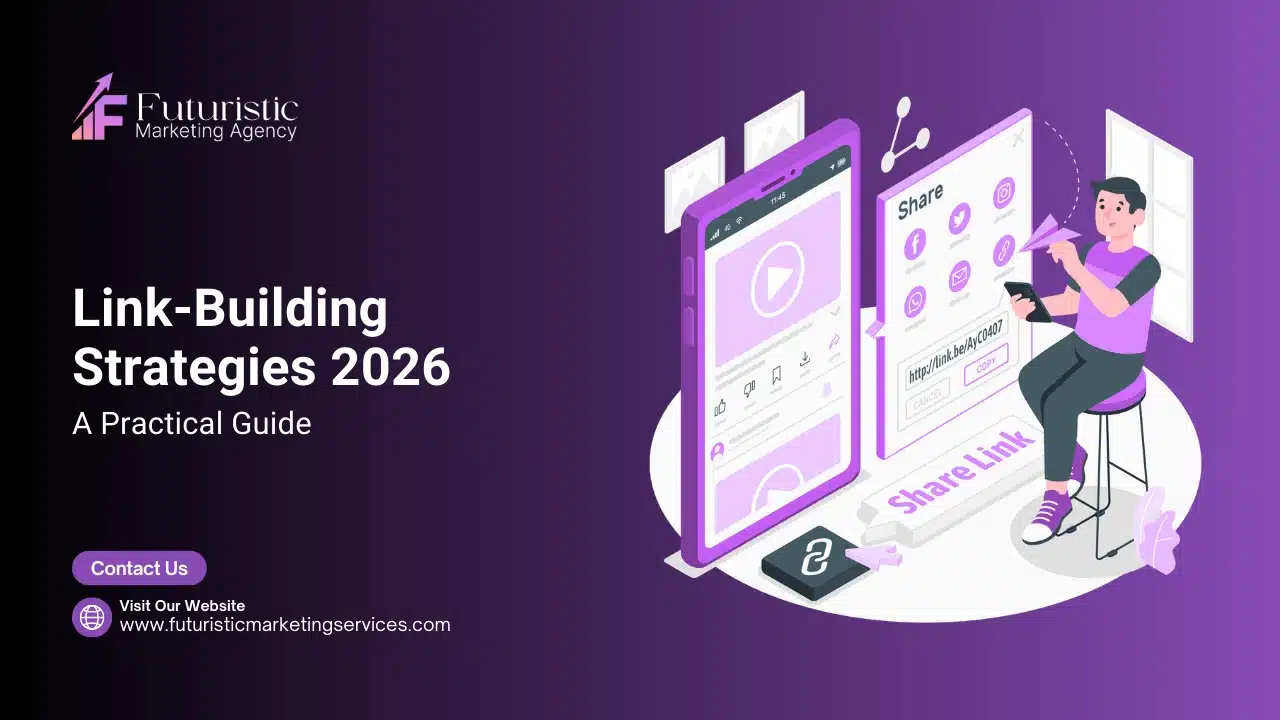
12 Proven Link Building Strategies in This Guide | 3.8× #1 Google Result Has More Backlinks Than #2–10 (Backlinko) | 17% Average Outreach Success Rate (Flying Cat Marketing) | 6,000+ Backlinks Earned via Original Statistics Posts (Backlinko) |
Link building is the process of earning hyperlinks from other websites to your own. Every high-quality backlink is a vote of confidence – a signal to Google that your content is authoritative enough for other publishers to reference. And in 2026, those votes still matter enormously.
The #1 result on Google has an average of 3.8× more backlinks than positions 2–10. Backlinks remain one of the top three ranking factors in Google’s algorithm – alongside content quality and RankBrain. But the strategies that work have changed. The tactics that earned links in 2015 – bulk directory submissions, comment spam, cheap guest posts on link farms – now trigger Google Spam Updates and penalties.
This guide covers 12 link building strategies that actually work in 2026: white-hat, scalable, and built around the quality standards that Google rewards. Whether you are starting from zero backlinks or scaling an existing profile, these are the tactics that move the needle.
What You Will Learn in This Guide |
Why link building still matters – and what has changed in 2026 |
12 proven, white-hat link building strategies ranked by ROI |
Step-by-step instructions for each strategy with real-world examples |
Link quality factors: what makes a backlink powerful or worthless |
Outreach email templates and best practices |
Link building tools you need in 2026 |
What NOT to do – tactics that will get you penalised |
A 20-point link building checklist and 12 FAQs |
Why Link Building Still Matters in 2026
Every few years, someone declares that “link building is dead.” It never is. Google has confirmed repeatedly that backlinks remain a top-three ranking factor. What has changed is not the importance of links – it is the quality bar Google sets for which links actually count.
Google’s 2024 Spam Updates specifically targeted three manipulative link-building practices: scaled content abuse (AI-generated content published purely to earn links), site reputation abuse (reputable sites hosting low-quality third-party content for links), and expired domain abuse (using expired domains as link farms). The message is clear: earn links, do not manufacture them.
What Makes a Backlink Valuable in 2026?
Not all backlinks are created equal. A single high-quality link can be worth more than 1,000 low-quality links. These are the factors Google weighs when evaluating each backlink:
Quality Factor | What It Means | Why It Matters |
Domain Rating / Authority | The overall authority score of the linking site (1–100) | Higher authority = more ranking power passed to your page |
Topical Relevance | How closely related the linking site is to your topic | Google weights relevant links higher – a cooking site linking to an SEO blog counts for less |
Link Placement | Where in the page the link appears | Editorial links in body content pass more authority than footer, sidebar, or nav links |
Anchor Text | The clickable text of the hyperlink | Relevant, natural anchor text signals context; over-optimised exact-match is a red flag |
Dofollow vs Nofollow | Whether the link passes ranking power | Dofollow links pass link equity; nofollow links are a “hint” – Google may or may not count them |
Link Freshness | When the link was published | Links from recently published, actively trafficked pages carry more value |
Traffic of Linking Page | How much traffic the linking page itself receives | 2024 Google leak confirmed that link traffic is a ranking signal – links people actually click matter more |
2024 Google Leak: Link Traffic Matters |
In 2024, a leak of internal Google documents confirmed what many SEOs suspected: the amount of real traffic a linking page receives influences how much ranking power that link passes. |
This means a link from a DA 60 page that receives 10,000 monthly visitors may be more valuable than a link from a DA 80 page that receives 200 visitors per month. |
Implication: Target link placements on pages that are actively trafficked – not just domains with high authority scores. |
The 12 Best Link Building Strategies: ROI Comparison
Before diving into each strategy, here is how they compare on effort versus reward. Use this to prioritise based on your current resources and goals:
Strategy | Difficulty vs Reward | ROI |
Digital PR & Media Outreach | ████████████████████████████████░░ | High |
Original Research & Data Studies | ██████████████████████████████░░░ | High |
Skyscraper Technique | ████████████████████████████░░░░░ | High |
Broken Link Building | ███████████████████████████░░░░░░░ | High |
Guest Posting (Quality Sites) | █████████████████████████░░░░░░░░ | High |
Unlinked Brand Mention Reclaim | ████████████████████████████░░░░░ | High |
Resource Page Link Building | ███████████████████████░░░░░░░░░░ | Medium |
HARO / Media Source Platforms | ████████████████████████░░░░░░░░░ | Medium |
Competitor Backlink Replication | ███████████████████████░░░░░░░░░░░ | Medium |
Content Partnerships & Co-Author | ██████████████████████░░░░░░░░░░░░ | Medium |
Podcast Guest Appearances | ████████████████████░░░░░░░░░░░░░ | Medium |
Scholarship & .edu Outreach | ██████████████████░░░░░░░░░░░░░░░ | Niche |
The 12 Link Building Strategies That Actually Work in 2026
Digital PR is the highest-return link building strategy in 2026. The premise: create newsworthy content – original data, expert commentary, trend analysis – and pitch it to journalists at major publications. When they cover your story, they include a link to your site.
Why it works: Journalists are always looking for data and expert perspectives to support their stories. If you can provide that, you earn links from DA 70–90+ publications that would be impossible to get through any other method.
Research Analyse competitors, find gaps, identify target sites | Create Build the asset – guide, data, tool, or outreach list | Outreach Personalised, value-first email pitches to targets | Secure Link Follow up once, negotiate placement, confirm dofollow | Track & Scale Monitor results, replicate winners, expand targets |
#01 | Digital PR & Media Outreach | Highest ROI |
How to Run a Digital PR Campaign
- Create a newsworthy asset: A data study, industry survey, original research, or trend prediction. Example: “We analysed 500 SEO campaigns – here’s what the data shows.”
- Build a targeted media list: Use Hunter.io, LinkedIn Sales Navigator, or Muck Rack to find journalists who cover your industry. Target writers at publications your audience reads.
- Write a tight pitch: Lead with the most surprising or counterintuitive data point. Keep it to 200 words. Include a link to the full data or asset. Make it easy for the journalist to cover the story.
- Send Monday–Wednesday: Open rates are highest mid-week. Avoid Fridays and Monday mornings.
- Follow up once, 5–7 days later: A single, brief follow-up is appropriate. More than one is considered spam and damages your reputation.
Digital PR Results in Practice |
Steven Macdonald (Kingspoint): “Using original statistics posts, I’ve landed links from TechCrunch, Intercom, Forbes, Shopify and Mailchimp. I rank #1 for all statistics posts I’ve published and earned 6,000+ backlinks over 3–4 years.” |
Flying Cat Marketing: “We’ve had about a 17% complete success rate with our outreach campaigns using a 5-email follow-up sequence – a low-effort strategy that consistently lands high-authority links.” |
#02 | Original Research & Data Studies | High ROI |
Publishing original research is one of the most reliable ways to earn editorial backlinks at scale. When you produce data that no one else has – an industry survey, an analysis of public datasets, a study of your own customer data – you become the primary source that other publications cite.
- Conduct surveys: Use Typeform or Google Forms to survey your audience or industry. Even 100–200 responses on a niche question can produce citable data.
- Analyse public data: Government datasets, open-source databases, and industry reports often contain interesting patterns that no one has surfaced and written about clearly.
- Study your own data: What does your business see across clients that others do not? Aggregated, anonymised client data can produce powerful industry insights.
- Publish annual reports: “State of [Industry] 2026” posts earn links year after year because journalists cite the most recent year’s edition.
Pro tip: Turn your research into multiple assets – a full written report, a summary blog post, an infographic, a data visualisation, and a LinkedIn article. Each format reaches a different audience and creates additional linking opportunities.
#03 | The Skyscraper Technique | High ROI |
Coined by Backlinko’s Brian Dean, the Skyscraper Technique is a systematic approach to earning the links currently pointing to your competitors’ best content. The core insight: if content already attracts links, it is proven linkable. Create something significantly better and inherit those links.
Step-by-Step Skyscraper Process
- Find proven link magnets: Search your target keyword in Ahrefs or SEMrush. Filter results by referring domains. Identify the top 3–5 most-linked-to pages.
- Reverse-engineer why they earned links: Is it the data? The comprehensiveness? The design? The recency? Understand what made it link-worthy.
- Create something genuinely superior: More comprehensive (more topics covered), more current (updated 2026 data), better designed (infographics, custom visuals), or more actionable (step-by-step instructions).
- Find everyone who linked to the original: In Ahrefs, enter the original URL > Backlinks. Export the full list of referring domains.
- Personalise outreach: “Hi [Name], I noticed you linked to [Original Post]. I’ve just published an updated version that covers [specific improvement]. Thought you might want to check it out.”
Success rate: Expect 5–15% positive responses. On a list of 200 prospects, that is 10–30 links – often from high-authority sites already proven to link to content on this topic.
#04 | Broken Link Building | High ROI |
Broken link building is a win-win strategy: you help a site owner fix a broken link (bad for their UX and SEO), and you earn a replacement backlink. It is one of the most conversion-friendly outreach strategies because you are leading with value, not just asking for a favour.
Broken Link Building - Step by Step
- Find relevant resource pages with broken links: Use Ahrefs Content Explorer, search for “[your topic] + resources” or “[your topic] + links”, then filter for pages with broken outgoing links.
- Check which broken links match your content: The original broken link should have pointed to content similar to what you have (or can create quickly).
- Create or identify your replacement content: If you do not have an exact match, create one. This turns the strategy into a content creation + link building play.
- Find the site owner’s contact details: Use Hunter.io to find the email of the site owner or editor.
- Send a helpful outreach email: “Hi [Name], I was reading your resource page on [Topic] and noticed the link to [Broken URL] is returning a 404. I’ve published a comprehensive [Topic] guide that would make a great replacement. Would you like to swap the link?”
Conversion tip: Mention the specific URL where the broken link appears and the exact anchor text. The more specific you are, the more helpful you appear – and the higher your conversion rate.
#05 | Guest Posting on High-Authority Sites | High ROI |
Guest posting remains one of the most controllable link building strategies. You write the content, you choose the anchor text, and you build the relationship. Done correctly – on genuinely relevant, high-editorial-standard sites – it consistently delivers strong backlinks.
What Makes Guest Posting Work in 2026
The Right Way | The Wrong Way |
Target sites with DA 40+ and genuine editorial standards | Target any site that accepts guest posts regardless of quality |
Pitch topic ideas genuinely relevant to the host site’s audience | Send the same generic pitch template to 50 sites at once |
Write content that provides real value – not just a vehicle for a link | Create thin, keyword-stuffed content designed only to house a link |
Use branded or natural anchor text (e.g., “Futuristic Marketing Services”) | Use exact-match commercial anchors (“buy cheap SEO services India”) |
Build a long-term relationship with the editor | Submit once, take the link, never engage again |
Aim for 2–4 quality placements per month | Publish 15+ posts per month across any available site |
Finding Guest Post Opportunities
- Search operators: “[topic] write for us”, “[topic] guest post guidelines”, “[topic] submit an article”, “[topic] contribute”
- Competitor backlink analysis: Check where your top 3 competitors have published guest posts using Ahrefs > Backlinks > filter by anchor text containing the competitor’s brand name
- Resource pages: Sites that curate resources in your niche often accept high-quality contributed content
- Build relationships first: Comment on the site, share their content, engage with the editor on LinkedIn before pitching – this significantly increases acceptance rates
#06 | Unlinked Brand Mention Reclamation | High ROI |
Every time someone mentions your brand name, products, or team members online without a hyperlink, that is a link opportunity waiting to be claimed. Since the author already knows your brand, conversion rates on this outreach are typically the highest of any link building strategy – often 30–50%.
How to Find and Claim Unlinked Mentions
- Set up monitoring: Configure Google Alerts, Ahrefs Alerts, or Brand24 for your brand name, key product names, and your founders’ names.
- Filter for unlinked mentions: In Ahrefs Alerts > Mentions, filter for “Without backlink.” In Brand24, filter for “No link.”
- Qualify the opportunity: Check the DR/DA of the mentioning site. Target sites with DR 20+ where a link will make a meaningful difference.
- Find the contact: Use Hunter.io or LinkedIn to find the author or editor’s email.
- Send a brief, friendly email: “Hi [Name], I noticed you mentioned [Brand] in your recent article – thank you! If it’s not too much trouble, would you be able to add a link to [URL]? It would help readers find us directly. Thanks either way!”
Why this works so well: The author has already demonstrated they value your brand enough to mention it. You are not asking them to evaluate you – you are asking them to complete a logical action they almost took anyway.
#07 | Resource Page Link Building | Medium ROI |
Resource pages are curated lists of the best tools, guides, and articles on a specific topic – maintained by bloggers, universities, associations, and media sites. If your content belongs on such a list, pitching to get added is one of the more straightforward outreach plays in link building.
Finding Resource Page Opportunities
- Search operators: "[topic] resources", "[topic] useful links", "[topic] further reading", "[topic] recommended tools", "best [topic] blogs"
- Competitor analysis: Check the backlink profiles of your top competitors in Ahrefs - many of their links will come from resource pages
- Google operator: intitle:resources + [your topic] inurl:resources - finds pages that include "resources" in both the title and URL (typically resource pages)
Resource Page Outreach
Keep your pitch short and specific. Identify exactly which resource page you are targeting, explain why your content belongs there, and make it easy for the curator to add you. Example:
Resource Page Outreach Email Template |
Subject: Resource suggestion for your [Topic] page |
Hi [Name], |
I was browsing your resource page on [Topic] at [URL] and found it really helpful – great curation. |
I recently published a [type of content] on [specific topic] at [your URL] that I think your readers would find valuable. It covers [2-3 specific points not on your list]. |
Would it be worth adding to your list? |
Either way – keep up the great work on the resource page. |
Thanks, [Your Name] |
#08 | HARO & Media Source Platforms | Medium ROI |
Help a Reporter Out (HARO) – now operating as Connectively – connects journalists seeking expert sources with professionals who can provide quotes and commentary. When a journalist uses your quote, they typically include a link to your website. This earns high-authority editorial backlinks from major publications with zero outreach required on your part.
Important 2026 update: HARO/Connectively was discontinued in December 2024. However, several strong alternatives now operate in the same space:
Platform | Description | Best For |
Featured.com | Curated expert questions from publishers – high-quality audience | B2B, SaaS, professional services |
Help a B2B Writer | Journalist queries specifically for B2B topics | B2B marketers, agencies, SaaS |
SourceBottle | Australian-based platform covering major English-language media | UK/AUS/US markets |
Qwoted | Verified journalist database with two-way communication | PR teams and agencies |
ProfNet (PR Newswire) | Premium platform used by major US newsrooms | Enterprise brands |
JournoRequests (Twitter/X) | Journalists tweet requests with #journorequest hashtag | Quick responses, UK-focused |
How to Get Your Pitches Accepted
- Respond within 1 hour: ournalists work on tight deadlines. The first relevant, well-written response usually wins.
- Lead with your quote, not your bio: Give them the quote first, save credentials for the end. Journalists want usable content, not a CV.
- Be specific and contrarian: Generic quotes get ignored. Specific data points, counterintuitive insights, and concrete examples get used.
- Keep it to 3–4 sentences: Short, punchy quotes are more quotable than long paragraphs.
#09 | Competitor Backlink Replication | Medium ROI |
If your competitors rank above you, they have backlinks you do not. Competitor backlink replication is the process of reverse-engineering those links and systematically targeting the same sources.
How to Replicate Competitor Backlinks
- Identify your top 3–5 SEO competitors: These are the sites consistently outranking you for your target keywords – not necessarily your business competitors.
- Analyse their backlink profiles: In Ahrefs > Site Explorer, enter each competitor’s domain. Go to Backlinks and sort by DR.
- Find the link gap: Use Ahrefs’ Link Intersect tool – enter your domain and your competitors’ domains to find sites that link to them but not to you.
- Categorise the opportunities: Guest posts (can you pitch the same editor?), resource pages (can you request inclusion?), broken links (did the competitor’s page die?), directory listings (can you claim the same listing?)
- Build a prioritised outreach list: Sort by DR. Start with the highest-authority sites that you have a realistic chance of replicating.
Pro tip: Pay special attention to links your competitor earned from listicles and roundups (“The 10 Best SEO Blogs to Follow”). These are highly replicable – contact the author and make the case for your inclusion.
Co-creating content with complementary (non-competing) businesses or influencers in your space creates a natural link exchange dynamic – both parties link to the jointly hosted content, and both promote it to their respective audiences, dramatically increasing the reach and link potential compared to content created alone.
#10 | Content Partnerships & Co-Created Content | Medium ROI |
- Co-authored guides: Team up with a complementary business to write a comprehensive guide. Example: an SEO agency and a web design firm co-authoring "The Complete Guide to Launching a Website That Ranks."
- Joint research: Pool data from two businesses to produce a study with a larger, more authoritative dataset than either could produce alone.
- Expert roundups: Quote 20–30 experts on a specific question. Each expert typically shares the piece and some link to it from their own sites.
- Co-hosted webinars: The webinar page earns links from both partners' networks, and the recording generates ongoing links as others reference it.
#11 | Podcast Guest Appearances | Medium ROI |
Every podcast episode typically has a show notes page that links to each guest’s website. A single guest appearance earns a permanent backlink from a relevant, actively maintained page – plus exposure to an engaged audience already interested in your niche.
How to Land Podcast Appearances
- Find relevant podcasts: Use Listen Notes, Podchaser, or Spotify to search "[your niche] podcast". Filter for shows with consistent publishing schedules and decent audience engagement.
- Craft a compelling pitch: Identify 2–3 specific topics you can speak on - frame them as episode concepts, not generic "I'd love to be a guest" requests. Include a one-line bio and links to previous media appearances.
- Start with smaller shows: Build a portfolio of 5–10 podcast appearances on mid-sized shows before pitching the biggest names in your niche.
- Always promote the episode: After the episode airs, share it across your social channels and link to it from your website. This drives traffic back to the podcast, making you a valuable guest who hosts want to invite again.
#12 | Scholarship Link Building | Niche |
Creating a scholarship for students and listing it on university financial aid pages is a well-known strategy for earning .edu backlinks. Because .edu domains typically have high domain authority and are trusted by Google, these links can significantly boost your overall domain authority.
How it works: Create a scholarship (typically $500–$2,000) for students in a field related to your business. Build a dedicated scholarship page on your website. Email financial aid offices and scholarship listing pages at universities to request listing – they do so as a service to students.
Important caveat: Google is aware of this strategy and has updated its guidance. Use this approach only if a scholarship is genuinely on-brand for your business. A forced connection between an unrelated business and a student scholarship looks manipulative and may be discounted.
Link Building Outreach: Best Practices in 2026
Personalise Not Templates Reference a specific article they wrote. Show you actually read their site. | Lead with Value Not Your Ask Start with what you are offering, not what you want. Fix their broken link. Improve their resource list. | Be Brief 150 Words Max Editors receive hundreds of pitches. If they cannot read yours in 30 seconds, it is deleted. | Follow Up Once 5–7 Day Gap One follow-up is professional. Two is pushy. Three is spam. One, and move on. | Track Everything CRM / Sheets Log every prospect, outreach date, follow-up, and response to avoid duplicate contact. |
Outreach Email Structure That Converts
Email Element | Best Practice | Common Mistake |
Subject Line | Specific and relevant: “Broken link on your [Topic] resource page” | Vague or clickbait: “Quick question” or “You’ve GOT to see this” |
Opening Line | Reference something specific: “I loved your piece on [Topic] from last week” | Generic: “I hope this email finds you well” or “My name is X and I work at Y” |
The Offer | Lead with what you are giving: “I found a broken link on your page / I’ve published a relevant guide” | Lead with what you want: “I’d like to request a backlink to my website” |
Social Proof | One relevant credential or result: “Our guide was cited by Search Engine Journal last month” | Long list of awards, qualifications, or an attached CV |
The Ask | One clear, simple ask: “Would it be worth adding / updating the link?” | Multiple requests or ambiguous call-to-action |
Closing | Professional and brief: “Thanks either way – appreciate your time” | Pushy or entitled: “I look forward to hearing from you soon” |
The Best Link Building Tools in 2026
You do not need every tool. Start with free options and add paid tools as your link building programme scales.
Tool | Cost | Best For |
Ahrefs | $99+/mo | Backlink analysis, competitor research, broken link finding, link gap analysis – the most comprehensive link building toolset |
SEMrush | $139+/mo | Backlink audits, toxic link identification, competitor backlink comparison, outreach campaign management |
Hunter.io | Free / $49+/mo | Finding email addresses of site owners and editors – essential for all outreach campaigns |
Mailshake | $58+/mo | Email outreach automation with personalisation – manages follow-ups and tracks opens/replies |
Google Search Console | Free | Your own backlink profile – see all links to your site, identify lost links, check anchor text distribution |
Screaming Frog | Free / £259/yr | Finding broken links on target websites – essential for broken link building campaigns |
BuzzSumo | $199+/mo | Finding the most-shared content in any niche – identifies what is already proven to attract links |
Brand24 | $79+/mo | Brand mention monitoring – finds unlinked mentions for reclamation campaigns |
Ahrefs Alerts | Included | Free brand mention monitoring if you already have an Ahrefs subscription |
Pitchbox | $195+/mo | Enterprise outreach CRM – manages large-scale link building campaigns with personalisation at scale |
Link Building Tactics to Avoid in 2026
Google’s 2024 Spam Updates explicitly targeted three categories of manipulative link-building. The following tactics risk manual penalties, algorithmic suppression, and in severe cases, complete deindexation of your website:
Tactic to Avoid | Why It Is Dangerous | Google’s Penalty |
Paid link placements (link buying) | Directly violates Google’s Webmaster Guidelines – classified as a link scheme | Manual action: “Unnatural links to your site” |
Private Blog Networks (PBNs) | Networks of fake sites created solely to pass link equity | Deindexation of all sites in the network |
Scaled AI-generated content for links | Explicit target of Google’s 2024 Scaled Content Abuse update | Site-wide ranking suppression |
Reciprocal link schemes at scale | “I’ll link to you if you link to me” arrangements when done systematically | Links discounted; pattern triggers review |
Comment spam and forum links | Easy-to-place links with no editorial value | Ignored by Google; possible spam filter trigger |
Keyword-stuffed anchor text | Unnatural anchor profiles with repeated exact-match keywords | Penguin-style penalty – rankings drop for target keywords |
Expired domain abuse | Buying expired domains with backlinks and redirecting them to your site | 2024 Update specifically targets this – links discounted or penalised |
Sitewide footer or nav links | Links appearing in every page’s footer or navigation on a partner site | Ignored as site-wide links pass minimal equity |
How to Measure Your Link Building Success
Vanity metrics like “total backlinks gained” mean little without context. Track these KPIs to measure whether your link building is actually improving your rankings and traffic:
KPI | What It Measures | Tool | Target Trend |
Domain Rating (DR) / Domain Authority (DA) | Overall strength of your backlink profile | Ahrefs / Moz | Steady monthly increase |
Referring Domains (Monthly Change) | New unique sites linking to you each month | Ahrefs / SEMrush | Consistent growth, not spikes |
Link Quality Score | Average DR of new linking domains | Ahrefs / GSC | Average DR 30+ for new links |
Organic Ranking Positions | Rankings for target keywords | Ahrefs / GSC / SEMrush | Upward movement over 3–6 months |
Organic Traffic Growth | Visitors from Google Search | Google Analytics 4 / GSC | Month-on-month growth |
Referral Traffic from Links | Visitors arriving via backlinks | Google Analytics 4 | Links earning real clicks |
Anchor Text Distribution | Ratio of branded, generic, and keyword anchors | Ahrefs | Mostly branded + generic (natural) |
Lost Links (Monthly) | Backlinks removed or redirected away | Ahrefs / GSC | Monitor and investigate sudden drops |
The 20-Point Link Building Checklist for 2026
# | Task | Priority |
1 | Run a baseline backlink audit – identify current DR, referring domains, and toxic links | Week 1 |
2 | Disavow confirmed toxic backlinks via Google Search Console | Week 1 |
3 | Set up Google Alerts + Ahrefs Alerts for your brand name | Week 1 |
4 | Analyse backlink profiles of your top 3 competitors in Ahrefs | Week 1 |
5 | Run Link Intersect analysis – identify sites linking to competitors but not you | Week 1 |
6 | Create one original data study or comprehensive guide as your first linkable asset | Week 2–4 |
7 | Build a resource page link building prospect list (50+ targets) | Week 2 |
8 | Find broken link opportunities in your niche using Screaming Frog / Ahrefs | Week 2 |
9 | Find 10+ unlinked brand mentions and send reclamation emails | Week 2 |
10 | Identify 5 high-authority guest post targets in your niche | Week 3 |
11 | Apply to 3–5 media source platforms (Featured, SourceBottle, etc.) | Week 3 |
12 | Create personalised outreach templates for each link building strategy | Week 3 |
13 | Launch first outreach campaign – resource pages + broken links | Month 1 |
14 | Pitch first guest post to highest-priority target site | Month 1 |
15 | Plan and execute first Digital PR campaign | Month 1–2 |
16 | Find 5 relevant podcasts and submit guest pitch | Month 2 |
17 | Monitor new / lost backlinks weekly in Ahrefs | Ongoing |
18 | Track keyword ranking movement monthly – correlate with link gains | Ongoing |
19 | Review and refresh anchor text distribution quarterly | Quarterly |
20 | Audit for new toxic backlinks and disavow quarterly | Quarterly |
Internal Linking Guide for This Blog Post
Anchor Text | Links To | Where to Place |
what is SEO | Blog 01 – What Is SEO: Complete Guide 2026 | Introduction paragraph |
off-page SEO | Blog 05 – What Is Off-Page SEO and Why It Matters | Opening – explain link building is an off-page SEO tactic |
keyword research | Blog 02 – Keyword Research: Complete Guide 2026 | Section on creating link-worthy content topics |
technical SEO audit | Blog 04 – Technical SEO Audit Checklist 2026 | Section on backlink audits – link to full audit guide |
white label SEO services | White Label SEO Services page | CTA section |
SEO consulting services | SEO Consulting Services page | Post-conclusion CTA |
free link building audit | Contact Page | Final CTA paragraph |
Frequently Asked Questions About Link Building
(Structured for FAQPage schema – add via Rank Math or AIOSEO in WordPress)
Q: What is link building in SEO?
Q: Which link building strategy works best in 2026?
Q: How many backlinks do I need to rank #1 on Google?
Q: How long does link building take to improve rankings?
Q: Is guest posting still a good link building strategy in 2026?
Q: What is the Skyscraper Technique for link building?
Q: What is the difference between white-hat and black-hat link building?
Q: How do I check the quality of a backlink before pursuing it?
Q: Can I do link building myself or do I need to hire an agency?
Q: What is a toxic backlink and how do I remove it?
Q: What is anchor text and how should I manage it for link building?
Q: How is HARO different from current media source platforms?
Want a Link Building Strategy Built for Your Business? |
Futuristic Marketing Services builds high-quality backlink profiles that rank and last. From digital PR campaigns and guest posting to broken link building and competitor analysis – we build the off-page authority your site needs to outrank competitors on every target keyword.
Request a Free Link Building Audit | Explore Our White Label SEO Services
Related Posts: What Is Off-Page SEO? Complete Guide 2026 | On-Page SEO: Ultimate Guide 2026 | Technical SEO Audit Checklist 2026